Tuesday, October 31, 2006

Our Days Of Disquiet

FOR THE LIVING who are no better than those who rest in peace, here's my All Souls' Day column in the opinion page of Sun.Star Cebu:

Restless

If he were a ghost, his grimace seemed not enough to spook City Hall into action.

“I would like, at least, to have my complaints noted and my questions answered,” rues a certain Alvin John Osmeña who hopes for city officials’ attention so they can “address the recurring problem on noise.” All that sound—loud music played inside vehicles and highly sensitive car alarms—reportedly bothers him wherever he is.

Must he consign himself to wait until he’d be six feet under before he’d experience what it takes to be tranquil?

That his grievances have fallen on deaf ears is indication enough that City Hall ought to be reminded what Desiderata intoned so solemnly: “Remember what peace there may be in
silence.”

But as its ears register nothing less than high frequency of the forthcoming Asean Summit, is City Hall up to the challenge for calm?

Isn’t its desperate need to live up to expectation or to prove that the city is no cemetery of progress a symptom of modern world’s neurosis?

It’s supposed to be a luxury, but taking things slow has become a liability. The go-getting mania has rendered it quaint to quell the cliché and, yes, smell the flowers. The quick and the dead, alas, have one thing in common: Too unconscious to find loveliness in their ornate funeral wreath.

Who has time to catch a whiff of grace as we reek of rage throughout our constant brush with rush hours, deadlines, quotas? Blessed are the departed, indeed, for having gone past the zone of discomfort Thoreau scoffed at: “The mass of men lead lives of quiet desperation.”

Indeed, pity the taxpayer in dire need for an accessible refuge in the midst of the city’s hustle and bustle. Where are our public spaces with trees to sit under? Breezy does it, if you ask the dead in memorial parks from which real estate developers are literally making a killing.

Indeed, anguish is when we have to puncture our eardrums to the feet-stomping tune of “Let’s Get Loud” so that we get a kick out of the doldrums. Ah, doesn’t that explain our private emergencies to lull ourselves with our iPod so can we insulate our head and shut the hysterical world out of our ears?

Hear, too, the prognosis from the World Health Organization: Depression will soon be the second leading cause of disability in the world where suicide ranks as the third leading cause of death among dismally spirited adolescents.

“Quiet is going extinct,” says Gordon Hempton, an acoustic ecologist who’s espousing a campaign on behalf of American parks called “One Square Inch of Silence” meant to protect a tiny spot of serenity from man-made sound. “I wanted to find a quiet place and hang on to it and protect it.”

Man, he’d better be dead than find himself fuming from both ears here this side of purgatory. (31 October 2006, Sun.Star Cebu)

Monday, October 30, 2006

To See Beyond The Surface

IT'S BEEN raining like crazy lately. And that might explain the certain dampness in my deadline-clouded view on such sunny matter as the Asean Summit in Cebu this December. Consider my recent column in the opinion page of Sun.Star Cebu:

Seeing Surgically

Facelift does it. Or so the City Governments of Cebu and Mandaue raise the stake for the self-esteem of both cities now in the craze for cosmetic tweaking.

So far, maddening has been the metro’s clockwork for extermination of all eyesores as the Asean Summit draws near.

Where have all the lunatics gone? Look, a monkey wrench has been flung at the idyllic lull of the city’s mountain barangays while City Hall goes on an overdrive to beguile the tourists and delegates who are set to come in droves for the December summit.

As reported recently in Sun.Star Superbalita, City Hall has been weeding out derelicts off the streets and dumping them at the city’s hinterlands. Some have been left to drift mindless through the farms and other deserted places, according to Sirao Barangay Captain Jesus Bontuyan who’s worried over any untoward tact his constituents might take against those wandering deranged in their midst.

What if the people, suspecting them either as burglars or ghouls, would gang up or hack them? “Motuo pa baya ang mga tawo diri sa amo anang mga ungo,” explains Bontuyan. “Mahadlok pud maglakaw-lakaw ang mga bata kon makakita anang mga buang.” (People here still believe in vampires and ghouls. The kids are scared to go out when they see the crazies.)

But for the summit’s host, nothing is more foolhardy than scaring our sightseers off their socks with the ghastly proofs of our Third World plight: the demented whose aimlessness might as well hold a mirror at the city’s desperate drive to wear the glamour of development on its tattered sleeve.

There’s something unhinged, indeed, about the obsessive slamming of doors against evidence of desolation while winking out the window for all the world to come over.

Pretty soon, in accordance with the suggestion of the president of the National Association of Travel Agencies, Cebu City Hall will deal with the beggars near the Magellan’s Cross “in a positive way” by letting the beggars wear original Cebuano costumes and putting up well-decorated horse-drawn carriages. Tourists who want to take photos will be asked to put some coins in a basket. “Even alms-giving can be given dignity,” he hoped.

Then again, would these frantic efforts to spruce up our surroundings be enough to make urban blight like water down the bridge?

Last we looked, the water crisis still screams while the flood threatens to get out of our garbage-clogged drainage in times of downpour. Roofs of squatters’ shanties in Sitio Paradise Island under the Mactan-Mandaue Bridge will soon be coated with green paint. But is this bright enough a prospect to wash away the fact of poverty staring in the face of tourists?

So far, criminality looks like it’s not letting up its mania to paint the town red despite the yellows layered on the city’s lampposts and sidewalk fences. And, sigh, it still takes a surreal imagination to daydream against the dearth of public museums or galleries and parks and spaces for promenade.

Unfortunately, no matter how earnest the energy to please our visitors, there’s no blinking away the myopia of our movers and shakers about urban planning and long-term agenda for progress. You bet, what our guests see is not what we get. (24 October 2006, Sun.Star Cebu)

Thursday, October 05, 2006

Raising My Bottles Of Beer To Mary Oliver

Got drunk recently, my head still reeling from the rhapsodies out of Mary Oliver's Blue Pastures, featuring 15 nourishing prose pieces "of nature, of writing, of herself and those around her." Winner of the Pulitzer Prize and the National Book Award, Mary Oliver regards this book as "biased, opinionated; also it is joyful, and probably there's despair here too..." I can only burp.


On being ruthless with one's commitment to creativity:

"It is six A.M., and I am working. I am absent-minded, reckless, heedless of social obligations, etc. It is as it must be. The tire goes flat, the tooth falls out, there will be a hundred meals without mustard. The poem gets written. I have wrestled with the angel and I'm stained with light and I have no shame. Neither do I have guilt. My responsibility is not to the ordinary, or the timely. It does not include mustard, or teeth. It does not extend to the last button, or the beans in the pot. My loyalty is to the inner vision, whenever and howsoever it may arrive. If I have a meeting with you at three o'clock, rejoice If I am late. Rejoice even more if I do not arrive at all.

There is no other way work of artistic worth can be done. And the occasional success, to the striver, is worth everything. The most regretful people on earth are those who felt the call to creative work, who felt their own creative power restive and uprising, and gave to it neither power nor time."


On being voracious for the world's feast of paradox:

"... I have found the headless bodies of rabbits and blue jays, and known it was the great horned owl that did them in, taking the head only, for the owl has an insatiable craving for the taste of brains... I know this bird. If it could, it would eat the whole world... The world where the owl is endlessly hungry and endlessly on the hunt is the world in which I live too. There is only one world."

On the identity of the chosen:

Who are you? They called out, at the edge of the village.
I am one of you, the poet called back.
Though he was dressed like the wind, though he looked like
a waterfall

On the prerequisites of becoming a poem:

"The translation of experience into contemplation, and the placement of this contemplation within the formality of a certain kind of language, with no intent to make contact-- be it across whatever thin or wild a thread--with the spiritual condition of the reader, is not poetry. Archibald MacLeish: Here is the writer, and over there--there is "the mystery of the universe." The poem exists--indeed, gets itself written--in relation between the man and the world. The three ingredients of poetry: the mystery of the universe, spiritual curiosity, the energy of language."


On the in/significance of poetry:

"Now, of course, in the hives and dungeons of our cities, poetry cannot console, it carries no weight, for the pact between the natural world and the individual has been broken. There is no more working for harvest--only hunting, for profit. Lives are no longer exercises in pleasure and valor, but only the means to the amassment of worldy goods. If poetry is ever to become meaningful to such persons, they must take the first step-- away from the materially bound and self-interested lives, toward the trees, and the waterfall. It is not poetry's fault that it has so small and audience, so little effect upon the frightened, money-loving world. Poetry, after all, is not a miracle. It is an effort to formalize (ritualize) individual moments and the transcending effects of these moments into a music that all can use. It is the song of our species."

Are You Stupid, Too?


God must love the foolish so much he made more than we can grin and bear them. There may be mountains of Nobel prizes for acres of mental toil, but the headlines have been far more shaky with constant tremors of idiocy enough for us to bury our heads in the mud of our madness and shame. Here's a reprint from my latest opinion column in Sun.Star Cebu:

Damned by the dumb

Mindless and selfishly senseless. Or so goes the side of the aggrieved about the act of suicide.

When a barangay councilor in Alegria, Cordova thought it was a good time to die by drinking a bottle of cyanide last Friday morning, his family and friends must have deemed it unwise for him to prove his detractors correct. Reportedly, he was fed up by snide remarks from his fellow councilors and constituents. “Bogo” (dumb), they smirked. And now they have the last laugh as his state of mind now turns into a mere meal for worms.

If only his epitaph would be etched along the line of this piece of insight: “Seeing ourselves as
others see us would probably confirm our worst suspicions about them.”

If only he knew that stupidity is not solely his crown of thorns. He’s not alone, after all, where the dearth of discernment is concerned.

Last week, a barangay councilor in San Jose del Monte City would have been better off if he were drunk with cyanide. Yes, instead of cheap liquor with which he proved his intelligence by shocking the entire country, shooting to death a 12-year-old boy who probably fancied himself Spider-Man by climbing and playing atop an electrical transmission tower.

In fact, there’s a legion of them whose lack of intelligence, matched only by scarcity of conscience, has been flaunted as a factor for public consideration.

Then again, the self-negating act of the ill-fated councilor ought to be an example for many of our so-called leaders who are learned only in heaping their waste on their constituency’s heads. Consider how their intelligence has been proven only by their ingenuity in making mountains out of the molehills of their self-interests.

Indeed, if wisdom were a font so free-flowing here on these islands, we would have been spared from the sea of opportunities sucked back to our sewers.

Talk about one-upmanship, and there would be monuments rising everywhere out of our surplus of smart-alecks.

Who needs a superpower where supercilious self-consciousness is a tad larger than life?

Consider the cinematic revelation of a congressman from Oriental Negros who berated a Cebuano legislator: “Yawa, if he thinks he’s Batman, I’m Superman!” Never mind if he’s clueless that “a man begins cutting his wisdom teeth the first time he bites off more than he can chew.”

Nietzsche, bless his soul, could have been a comfort for the cyanide-thirsty councilor desperate for his head to stay above water of scorn. “Better to know nothing,” he sneered, “than to half-know many things.”

Friday, September 01, 2006

Bagdok Bisdak!

WINDING UP the "Buwan ng Wika" celebration, the Gawad Komisyon 2006 (sponsored by the Komisyon sa Wikang Filipino) spotlighted Cebuano writing whose poets and fictionists took center stage with their counterparts in other languages from the Tagalog region, Ilocos and Pangasinan. Awarding ceremony was held at the Philippine Columbian in Manila last August 31, with guest of honor Vice President Noli de Castro.

Here's the complete list of winners in the Cebuano division: POETRY-- Michael U. Obenieta (1st), Ernesto Lariosa (2nd), Oliver Flores (3rd), Arlaine J. Obenieta, Gumer Rafanan & Angie Nellas (Honorable Mention) FICTION-- Dindin Villarino (1st), Gumer Rafanan (2nd), Marlo Geocallo (3rd), Gremer Chan Reyes, Tranquilino Udarbe, Fred F. Monternel (honorable mention)


> Photo 1: Modesty aside, yours truly (1st Prize, Poetry)

> Photo 2: With my literary "tatay" Ernesto Lariosa (2nd Prize, Poetry)

> Photo 3: With my good friend Dindin Villarino (1st Prize, Fiction)

Monday, August 28, 2006

Off-Limits, Anyone?

DISPLACEMENT doesn't need distance. It's an urban commonplace where estrangement and enmity happen with the frequency of a fire alarm or the screaming siren of an ambulance. Here's a reprint from my latest opinion column in Sun.Star Cebu (29 August 2006 issue):


Crash Hours

Thank the heavens we’re no planets, or we’d be on a collision course more often than we hear prophets of doom about the world’s end.

Long before scientists bumped off Pluto from the planetary clique, and whittled it down to size as merely a “dwarf planet,” our own world has been getting smaller. To the level of the trivial goes our trite tendency for turf wars and clan rivalries, after all. As if we were aliens among ourselves hardwired for each other’s invasion.

Why, here this side of the equator, even a parking space becomes a battleground. Or so it seems to the son of Cebu’s governor and the chief of the Criminal Investigation and Intelligence Bureau (CIIB) who were in the mood for Star Wars in front of the entrance of an uptown bar one recent night.

Hotheads of the world, unite; you have nothing to lose but your cool.

True, it’s getting cramped in here up to a choking point, and spitting fire comes breezy where there’s barely a breathing space for a handshake. We’d never run out of bones for each other’s contention, and going to the dogs seems to be the only way to push borders, if not to stretch our threshold of tolerance or patience.

Finding a place or even a day unbroken by the usual outbreak of hostility looks like a blind wager while astronomers now get more elbow room to redefine and render obsolete our notion of the solar system.

Talk about finding a place under the sun, and we might as well cover ourselves against ultra-violent rays with newspapers perennially stifling and blood-stewing from the prerequisites of conflict.

Space is of the essence, but that sounds as esoteric as astral travel where there are hardly public places to sit down awhile under a tree and to let the ill wind stirring in one’s head to scatter in the manner of dry leaves.

If looking for a parking space gets as dizzy as steering one’s way out of labyrinths, as motorists can attest, finding a park could be the fastest way to reach a dead end. Or, to rub elbows with lovers, licit or otherwise, whose threadbare intimacy and privacy are frayed at the edges by the invasion of the city’s derelicts and perverts bracing for their prey.

Spaced-out. That’s what one intuits while loitering through the heart of the metro where the homeless, beggars, and vendors might as well have raised their stakes in the sidewalks and overpasses. The bottleneck, clearly, is not only down the road where rage goes with the exhaust fumes.

Getting into each other’s way, unlike planets in their respective orbits, there’s plenty of time and lot of space only for breathing smoke down each other’s necks.

Friday, August 04, 2006

Bona Comes Back

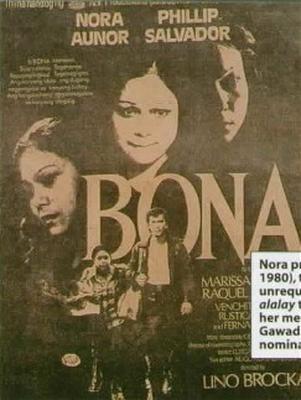
C ited as one of the "Best 100 Films in the World" by the Museum of Tolerance (Los Angeles, USA) , Lino Brocka's Bona highlights the hapless plight of film archiving in the Philippines. Sadly, the country holds no copy of this gem of a film which has been acclaimed in various international film festivals like Cannes and Torino. There's hope, however, that the present generation would still have the chance to see it.

From a recent private screening of Bona, Ateneo professor and anthropologist Tito Valiente takes a second look at one of the most celebrated Filipino films (shown in 1980) in his recent column in Business Mirror (3 August 2006). Here goes the reprint:


Native Returns

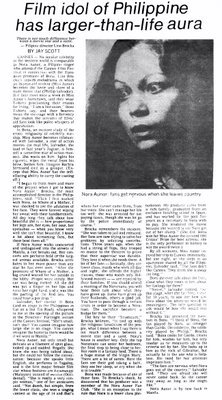
At the lobby of Studio 1 of ABS-CBN, a table draped in a wide swath of cloth cradled flowers. Around it were posters of a film copied from old newspapers. A man in business clothes was standing still beside one of the photos. That was the closest they could get near the horizon of a person called Nora Aunor. That night, a copy of Bona, the movie produced by Aunor and directed by Lino Brocka was going to be screened, the copy provided by Cinematheque Française, a film institution in France that archives excellent cinema. (Bona will have its cable television premiere in the Sunday Cine Premiere block of Cinema One on August 20 at 8 pm.)

As with the other guests filing in, people were there with similar purposes. There were the young cineastes who may have read the reviews of Bona in various film journals and web sites and blogs, for Bona is one of the most dissected Filipino films. These people may have cited the film as one of their favorite works even if they had not seen it previous to this evening. The sheer presence of the film in the minds and essays of writers and critics was enough to convince them that they were dealing with a work that was benchmarked and graded according to accepted international aesthetics. But there were also middle-aged men moving as one, looking like pilgrims about to approach the inner sanctum of the shrine. They were so quiet that you could feel through their movements the grace of many a Nora Aunor cinematic outings. These are people who could utter word for word, grand inflection for grand inflection, the dialogues that their idol—in the sense of worship and reverence—gave voice to on the silver screen.

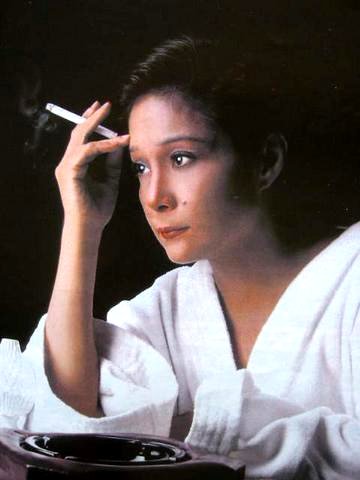
It was not merely a voice coming from a body. Nora’s voice in many films, including those that were sinfully trivial and fun, slithered and sauntered out of the screen and into the domain of the popular, the populist, the political. The lines, as well as the characters, from which those meanings sprung transcended the instrument of cinema and became part of the collective yearnings of a mass audience who saw in Aunor not just an actor but someone equipped with a divining rod that could trace the fault lines of a group of people even as it would direct them to the wellspring of their neurosis and salvation. Aunor’s much-documented celebrity was going to go through a reassessment that night, to check if the books—and essays and poetry—written about her icon were really truthful valuation of her person and her genius and not simply the ranting of academics trying out new theories about popular culture.

Seated as I was at the orchestra, surrounded by fans, I could sense the undertow of nervousness in those faces upturned to the screen; there was also sadness and longing. Most of the people there, I believe, were perched at the edge of their seats, the gurgling in their hearts pushing them almost to the edge of a sweetly welcomed nervous breakdown. Again that night, some simply ceased to be film viewers and moved on to be witnesses of an apparition.

A history of tastes

The metaphor of the sacred, the discourse of power, and the narrative of dispossession apply to the audiences of Bona as well as to the film.

The film opens with the male-dominated procession of the Black Nazarene of Quiapo. Men are throwing their shirts and towels onto the carriage of the Christ icon, to be wiped against the body of the icon. Then the face of Aunor, as Bona, is shown, lost in the crowd, but not lost in the ritual. The next scenes bring us to what preoccupies Bona (other than a religion in display). She is seduced by another faith, as she displays to us an almost reverential and awe-stricken admiration for a bit-player, Gardo. Critics use the word “obsession” to process the relationship that brings Bona to Gardo. But viewing the film again gives us other words. Like irrationality. Like lust and love.

You know, of course, the story. How, one night, Gardo comes home and tells Bona that he is leaving for abroad, and she should just go home. Then how Bona looks at the boiling pot of water. And the rest is cinematic history. Part of this history is that Bona the film and Aunor as Bona have become guideposts for the evolution of film-viewing and re-viewing in the Philippines. Go and run to the nearest library and catch the writeups of that period, when Bona was first screened commercially, and you will see how so much of the appreciation of the film went beyond and behind the cinema.

Reporters then wrote how Aunor had to produce the film to convince people that she could act. And yet, Bona was produced in 1980, a full three years after Aunor thundered through the screen in Tatlong Taong Walang Diyos, and went on to win the Urian for Best Actress that year.

The screening answers many questions but also opens up many more. Given how the screenplay displays an almost reckless disregard for coherence, one could ask now if Brocka really enjoyed Aunor in the film. The film looks like it is meant to showcase another talent, that of Phillip Salvador, thus bringing some critics to describe the film as his film. One could even wonder why Brocka and the writer chose a bit player as the object of Bona’s adoration. This preoccupation with Salvador, however, becomes the bane of the movie.

At the end, Bona is indeed Nora Aunor’s work. Bona is Aunor looking, with a bit of melodrama and masochism, how she, an unknown, has become the object of many people’s adoration, the actor becoming the icon.

The power of the tragedienne/icon in Aunor is that she is able to weave a character into a full functioning tapestry of nerves and magic. Even then, you cannot blame those who genuflect before her when they cite the many gems in Bona. There is Aunor running away from her father, the speed of her escape as frantic and funny as it was demented. Aunor looking from the fence into her home where the wake for her father is taking place, fear and love and anxiety etched in a shot that merely shows one half of her face. Aunor peeking from the kitchen, tension personified, the rigid figure melting into the loneliest of embraces with her mother, played with brittle tenderness by Rustica Carpio. Then, there is that scene—when she throws the boiling caldron of water onto Gardo’s body, the wretchedness on her face a troubling chemistry of dementia and despair, and a rage that seems to travel from her scarred soul, in a nuanced form that only Aunor could summon.

You can look for more, but at the end, there is one lesson: Nora Aunor is second to none and no one follows after her. Not yet, anyway. I knew this when I stepped out of the Studio One into the lobby once more. The table that held the flowers was shrouded in black, more like in mourning for the passing of good films that we used to make, and for an actor like Aunor, whose genius might as well be dead in our dreary landscape of commercialism and bad taste.


*** Photos culled from the blogs of Willi Pascual and Jojo de Vera as well as the archive of the International Circle of Online Noranians (ICON) e-group.

Thursday, July 27, 2006

Let There Be Flight

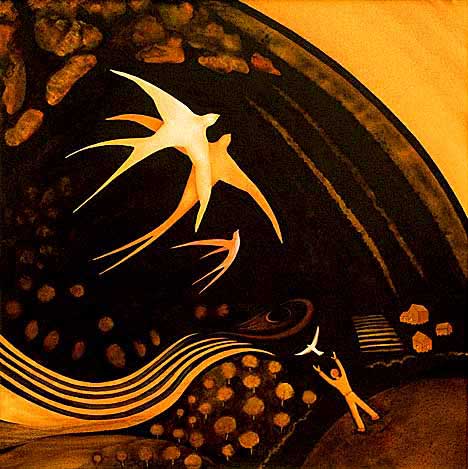
Houdini hours. That's what I call those spells of wonder at the edge of awareness when words soar above the hubbub between sleep and death, striving for a consciousness uncaged.

That happens when I morph into a figurative fugitive after being caught up in the sundry details of insignificance with which the days pass us by, as if everything were merely a matter of happenstance. Yes, hapless ever after like dust in the heels of us carelessly passing through.

Still a fledgling in Poetry after 12 years so far of pursuing the birdcall of this "most sullen and solitary of art," I have been at a loss over some of my pieces too elusive to stay, resisting to be gathered as keepsakes of my greenhorn flights of fancy. As if they refused to be caged or be fixed like dead butterflies framed up on a wall. Where have all those poems gone?

Painstakingly, and even if a lot of my literary attempts often leave me flushed in the face while I wince and squirm under my skin, I have plucked out some that have refused to be towed out of my reach, stuck somewhere where I tucked them pell-mell, gathering dust and the smell of forgetting.

For better or for worse, I intend to keep these as mementos of those moments that stretch eternal out of "the white walls of silence," when my cowlick fluttered cloudward as I ventured my own version of being an escape artist out of the fetters-- tritely does it-- of merely skimming over the surface, in search of meaning and its presences.

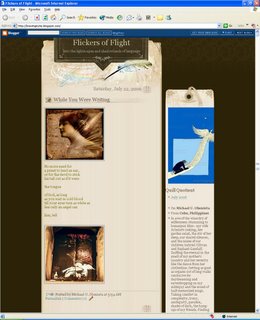
With your indulgence, allow me to invite you to my new blog for my poetry in English: Flickers of Flight (http://brewingmyke.blogspot.com). Ayu-ayo!

Saturday, July 15, 2006

Viva Bisdak!

GO KICK me with this shamelessly indulgent tidbit, and I don't mind at all if you take it with a lemon-twisted grain of salt.

It doesn't happen all the time, anyway: one's blog being chosen Cebu Site of the Fortnight (July 15 - July 31, 2006).

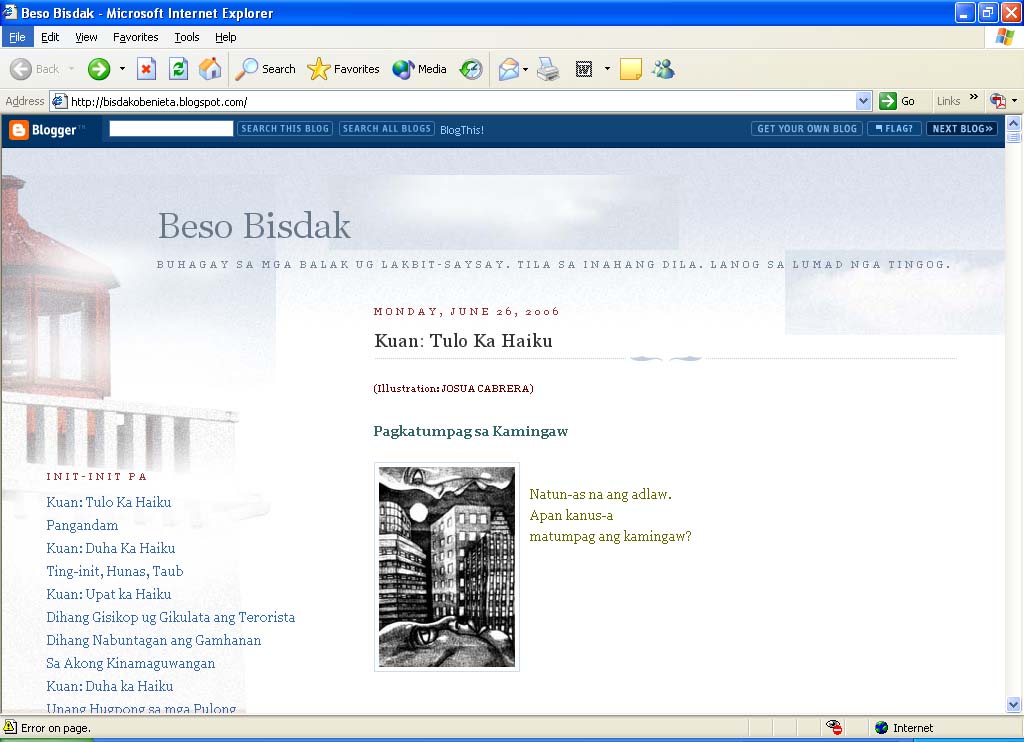
Bitaw bay, Wa'y Blima! Cebu (the leading web portal to Cebu) has singled out Beso Bisdak-- my online cauldron of creative writing in Cebuano-- "selected from the Cebu Web Directory on the basis of criteria such as quality of content, design, and relevance."

And all the while I thought only a stray cat gives a rat's tail of a chance to bother about anything that reek of Cebuano.

Therefore, allow me in gratitude to pay the previlige forward by recommending another site by a fellow who rocks and rolls with his Bisdak identity.

He needs no intro, my colleague Insoy whose band (Missing Filemon) has been at the rears and flanks of this tsunami in the local music scene. "Bisrock," it's called. Right off the bat, that's the talking point as Insoy's blog Insoymada launches a new section in Q-and-A format.

It's where Insoy keeps "important "conversations" with people and friends whose opinions matter, and those whose opinions are so trivial that they matter." For the maiden interview, my friend Januar Yap (who coined the word Bisrock) takes the bloglight. Na hala, padayon, labyog Bisdak!

Tuesday, July 04, 2006

Amen To Ambiguity

(A reprint from my column today in the opinion page of Sun.Star Cebu)
When one’s value judgment shakes in the wind of controversies now threatening to pummel one’s faith cold, certitude has become such a lonely word.

So what’s the last word about a former parish priest in Danao town who has been sneaking under the shadow of his dalliance with a young lady? Or, about the case of another local priest—now circulating again in the Internet— who’s still under the pall of accusations by two altar boys he allegedly slept with some two decades ago in the United States.

In spite of all that, however, the faithful is still coming in droves, filling up the pews every Sunday here in this so-called Cradle of Christianity; our minds stubborn over matters too smeared for headlines and scoops to gloss over. Only the heavens know. Or so we seem to say, our eyes shut in prayer so that what remains of our faith won’t be frayed any further.

For those waiting for moral certainty, up goes the dare to be detectives. And, yes, to be hawk-eyed while hoping for discernment. Consider the point raised by Jewish theologian Abraham Heschel: “The cardinal issue— Why does the God of justice and compassion permit evil to persist— is bound up with the problem of how man should aid God so that his justice and compassion prevail.”

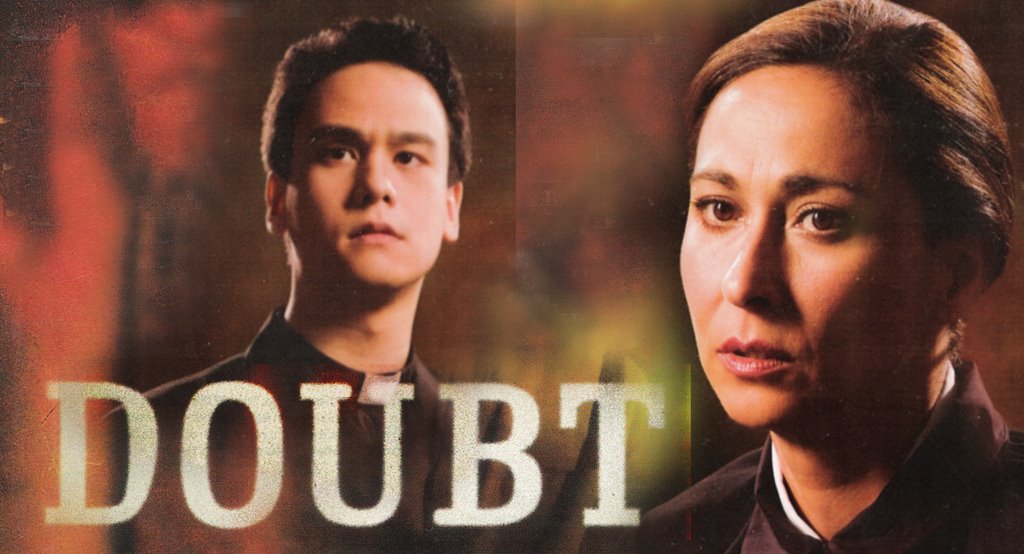
As if raising smoke out of the burning issue these days, John Patrick Shanley’s acclaimed play titled “Doubt” couldn’t be timelier. Brought to Cebu by Little Boy Productions, Shanley’s Pulitzer Prize-winning work deftly dramatizes how tricky the matter of truth can be. As an opportunity for soul-searching, Shanley suggests, nothing beats ambiguity.

Set in a Catholic school in Bronx, the conflict in the play is kicked off with the suspicion of the rigidly no-nonsense principal Sister Aloysius (in a fiery performance by Cherie Gil). Wary of Fr. Flynn, the boys’ basketball coach, she has sensed something fishy between him and the school’s only black boy.

What ensues unravels like a witch-hunt until the nun’s conscience gets wracked with her white lie triggering the priest’s resignation, casting a dark spot on Fr. Flynn’s claim of innocence. But up to the end, Shanley leaves the viewer with no clear-cut proofs of either the nun’s moral ascendancy or the priest’s guilt. Evidence remains inconclusive, the sense of disquiet dares the audience to go back and wrestle with the words of Fr. Flynn's sermon at the start of the play: “What do you do when you are not sure?”

That’s a challenge many of us had to confront head-on in this season so rife with confusion.

~~~ 000 ~~~

From my inbox, here’s a bit of reminder or reality check about a God who does not discriminate about who he uses. The next time we shake our heads in uncertainty, here are characters from the Bible who seem up to no good:


Noah was a drunk. Abraham was too old. Isaac was a daydreamer. Jacob was a liar. Leah was ugly. Joseph was abused. Moses had a stuttering problem. Gideon was afraid. Samson had long hair and was a womanizer. Rahab was a prostitute. David had an affair and was a murderer. Elijah was suicidal. Isaiah preached naked. Jonah ran from God. Job went bankrupt. John the Baptist ate bugs. Peter denied Christ. The disciples fell asleep while praying. The Samaritan woman was divorced, more than once. Timothy had an ulcer. And Lazarus was dead!

Monday, June 26, 2006

From Rapture To Rupture

If you've got the temerity for a tightrope pirouette and the gall to imagine yourself a contender for the reality show Fear Factor, it wouldn’t be too farfetched to see a camel entering the eye of the needle. Or, the hole of a wedding ring.

Long before Sun.Star Cebu sent shivers down the spines of singletons with its recent three-part series called “Going Solo” — proving there’s an epidemic of unhappiness in the city enough to make annulment lawyers grinning their way to the banks— a whole galaxy of words has coalesced into a common fact: Marriage is a matter of courage.

Forget the flair of the wedding planner who, having read too much romance novels or seen her immodest share of Hollywood potboilers, will have the prospective couple believe that everything in the glossy magazine or in her favorite teleserye is true. Ah, the mirage of two minds admitting no impediment to the pleasure principle in this era of advertising.

Truth be told, no wedding planner takes care about what happens next because it’s really up to the couple concerned to make a sense of rhythm and order, a cosmos out of the chaos theory so true to the frowns of feminists and the caution of the commitment-phobic.

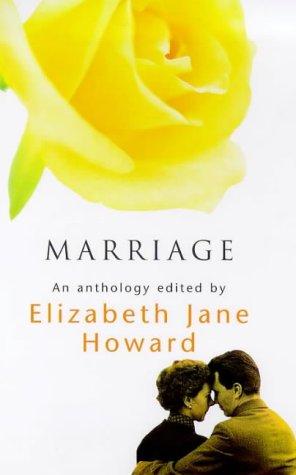
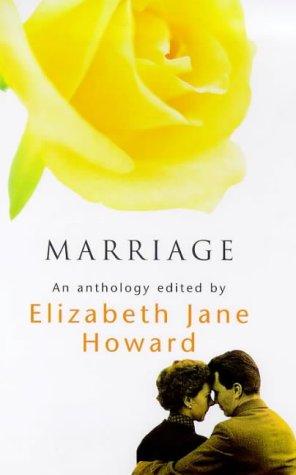
“It is the most challenging relationship any of us attempt in our lives, and an increasing number of us seem to fail,” goes the blurb of Elizabeth John Howard’s book Marriage, titled simply thus as if to leave no room for further complications. It’s one of the gifts my wife and I received when we agreed to go headlong into our common adventure against the unknown four years ago.

It’s a jungle out there after the wedding photographer finds another client for a funeral, probably of someone who succumbed to the sweet hereafter in the wake of sleeping with snakes or swimming together with piranhas. Or so agree with a cuss “practically one couple every 24 hours” who kick themselves to Splitsville, as cited in the special report.

When one writer defined courage as a “conquest of fear,” he might as well have described marriage as a mind-over-matter engagement with reality at the risk of losing one’s head. Or, against the slings and arrows of domestic fortune, ducking under the matrimonial bed. If you don’t have the mind—or the moxie— for it, you could tear out your hair about psychological incapacity, like 95 per cent of the petitioner for annulments in the city.

From someone who came short of murdering her husband, erasing him from her existence the legal way out, it struck me that my friend C. still has the grace to wax hopeful for me and my wife, writing a dedication on the book’s flyleaf: “All the best.” Not for better or for worse, mind you. Something that I wished for her, too, when she opted not let the failure of her first marriage be a closure for finding and fulfilling herself.

Cautionary tales about lovebirds turning targets for slingshots, she got a first-hand account. But that hasn’t stopped her from daring to take a second chance. Hopefully this time, her second husband is someone she could hum an ode with against all odds. And, in the process of partaking the gifts of their individuality, may they become sentinels of each other’s solitude.

To rage is fine, true. But nothing beats the basic or the residual verities of clichés: Faith, hope, love. That, plus the creative spunk and, yes, the courage to chuckle against one’s cynical heart.

In closing, here’s a bit from Howard’s book that singletons might consider for a second look. “There is no greater risk, perhaps than matrimony,” averred Benjamin Disraeli, from a letter to a lady on her engagement. “But there is nothing happier than a happy marriage.”

__________________________________________________________________

Howard's anthology is a treasure trove of extracts from novels, short stories, poems-- all illustrating the changing moods of marriage, from joy to despair. Her choices are eclectic and refreshingly unexpected, ranging from Anton Chekov, C.S. Lewis, Jane Austen, Michel de Montaigne, Erich Maria Remarque, Robert Graves, Oscar Wilde, Franz Kafka, Thomas Hardy, Virginia Woolf, Gustave Flaubert, William Shakespeare, James Thurber, Evelyn Waugh, George Eliot, George Bernard Shaw, Benjamin Disraeli, etc.

Tuesday, June 20, 2006

A Runaway Wise Piece Of Advice

WHO says one has to grit one's teeth and be aggressive to wear courage on one's sleeve? Give yourself a break, man. Or kick yourself if you deem it beneath you, as graceless as losing face, to hold your ground when the going gets rough.

Being tough is tritely macho. Or so avers Mr. Somchai, an Aikido master, at the recent 1st Fukakusa Shihan Aikido and Weapons International Seminar in Cebu. There's more to bravery than meets a black eye.

"Running away is the best form of self-defense," stresses Mr. Chomsai after he demonstrated a move to escape from several aggressors and exited as if nothing happened. “The Aikido philosophy is of peace, harmony and unit,” Mr. Somchai explained. “If you are trapped, defend yourself but if you can still run, then run.” Weaseling away from a fight is not a cowardly act, agrees Giovanni Capannelli, an Italian fouth dan aikikai and senior economist of the Asian Development Bank.

You bet, I'm on my feet.

Friday, June 16, 2006

In Praise Of All Fathers (And Their Mothers, Too!)

TO CELEBRATE Father's Day, here's a reprint of my column in Sun.Star Cebu (February 11, 2003) which I wrote six days after the birth of my eldest son, Gabriel Ollivan:

FOR I HAVE SINNED

On the day I was to be baptized, my mother had to whisk me out the window. My father was dead drunk at the door, that’s why. It’s one story I wish to hear straight from my father’s mouth, as though getting the long and short of it were my birthright.

If he saw the film Road to Perdition, my father would have deemed Paul Newman a saint. Amen, thus he could have sworn to what seemed to him a gospel truth after Newman’s character intoned: “Sons are put on earth to trouble their fathers.”

Short of committing parricide, my father and I have done everything in the book to break the tie that binds us. Osmosis is a process easier to understand if the precision with which we break each other’s hearts were a mutual experiment. Yes, being a pain in each other’s neck is a science we’ve raised to the level of art.

How my father lives up to his name, Severiano. It’s overkill to go into details. Suffice it to say that what my father and I do exceptionally well is run of the mill. The movies and the novels have wrung the topic of father-and-son conflict dry, certainly. Look, the slim copy of Turgenev’s Fathers and Sons still groans on my shelf, so plump with its dog-ears.

Suffice it to say that as long we’re together, there’s no need to bother about news of an impending global war. There’s always a booby trap in each other’s way, and our silences can be so companionable as though we were the only ones left walking in the ruins of a bombed city.

If there’s anything good at being my father’s son, it is in the way he has inspired me to be ruthless in steering out of his shadow and toeing along the lines of a character in Ralph Ellison’s Invisible Man who said, “Be your own father.” Along the way, I’ve learned to swallow more than Ellison’s words. Yes, even though nothing is harder to take than softening one’s heart for the sticky stuff called tenderness.


Or something like forgiveness. This, I now know, must be fierce— a lesson I took time learning from my mother who’ve loved and endured without apologies such a man I thought only my grandmother can. If goodness prevails over all things gone awry, these two women in my father’s life can swear.

When my wife underwent a caesarian operation last week, my father stayed outside the hospital. So typical of him, so I thought until my mother told me nearly a week after my child’s birth that it was my father who rushed to the nursery, even risking one of the nurse’s ire when he went beyond the sterile area in his excitement to get a closer look at his grandson. He was relieved, so swore my mother, to see my firstborn safe after my wife’s ordeal at the operating room.

Stories, so I wish to tell my son Gabriel Ollivan soon, must leave a lot of room for revision.

Thursday, June 15, 2006

Poem For Papa and For My Sons


SEVERIANO


Summoning the metaphor of stone, his name.
It stuns my tongue to utter it, my teeth
gritting syllables of gravel. So sovereign
it is as his shout calling me back, and I’m
suddenly a child again, mouth agape and gasping
for breath as if father were a word hurled
farther away that I must run after, hurtling me
through hurts unmapped, across estranged acres
traced by trajectories of rage, and gauged by
velocities of loss. Yet the sparks of a stone-rubbed
heart strangely kindles love’s belated
light; its warmth burning this intimate wrath
until it thaws, and smoke unseethes our ancestry
of aches— our common tree— where ire, rock-
rooting, was sired. Once in a dream, I stumbled
on Grandpa’s grave, and I clawed, digging
for his bones, its heft no more than a fistful
of pebbles. Wakeful now, I’m all ears to
the absence of his voice. It roars, swearing
I’m just a chip off the old block: a stowaway
towed by a wayward streak not even the most
severe of beatings could break. Consider then
the river and its heritage of boulders.
Imagine me as the bridge over it where you,
children all forthcoming, shall meet.
Go down the water. Wash your feet.


* SEVERIANO was first published in the Philippine Panorama magazine (April 13, 1997) and later anthologized in the Likhaan: Best of Philippine Poetry and Fiction 1997 (UP Press)

Poem For Papa


INTER NOS

A static in the heart.

We’re mute, mutual as we are
with blindfolds. We’ve seen no evil
or heard while our fingers concatenate
like accidents on the switch.

Whichever channel we turn, the shift-
shape of images eludes us, deluding
the split-seconds of David Koresh, babytalk
on soaps and shampoos, Michael Jackson’s
moonwalk, the CNN war dispatch
and a teaser of a wrestling match.

Wordless, the world is
loud enough in this room
cramped but larger than death.
We’ll be one with the late-night news.
Or else, who will reveal the slaying
of the murderer, breathless
and bitter between us?

We’ll have rest at last.

* INTER NOS was first published in Home Life magazine in 1996 where it won in its Annual Poetry Competition. It’s also anthologized in In Time Passing: The Best of Home Life as well in Little Workshop, Little Critique (both books edited by Leoncio Deriada)