Showing posts with label Poetry. Show all posts

Thursday, May 15, 2008

Because Lapu-Lapu is neither good only as a fish stew nor a lonely statue


You may take any true-blooded Cebuano out of the ground beneath his feet, but there's no taking away the homebound rhythm of his heartbeat. Wherever he may be, regardless how distant his corner under the sky may be and no matter if his mouth reeks and turns sloppy with the staleness of nostalgia in this age of diaspora, his tongue will always be tattooed with the taste of earth.

Recenly, I created an online hub--a sort of homecoming spot, a melting pot--for creative writers in Cebuano who've been riding the ripples toward the four winds in search of the so-called greener pastures. In strange lands, the ear keens for familiar voices that may be all we will ever need to hear our inner selves in the face of the goblin called globalization, to reclaim and remind ourselves who we were, to begin with, and who we will always be. To go far in the world, all we really need is to stay rooted, no matter the uncertain loam of elsewhere we've chosen to raise our stakes into.

Thus Kabisdak (Kalihokan sa Bisdak nga Katitikan) is born, out loud with something like a battlecry against the cold-blooded spawn of alienation spelled triple in scarlet letters: KKK (kalaay, kalimot, kamingaw). In the face of distance and displacement, may Kabisdak be a way as well for us to touch base with the magsusulat who choose to anchor the flight of imagination in the native shore. Our common ground. Our mainland of memory in the globe-embracing ocean of our saying and singing.

Na hala, dapiton ko kamo ngadto sa balayan sa Kabisdak. Ablihi lang ang ganghaan pinaagi sa pagtuktok-tuplok ning maong luna:
www.balaybalakasoy.blogspot.com

Saturday, April 26, 2008

Give us this day our daily verse

Reality bites for those rabid about reading. The news, particulary. The stuff of headlines, the wounds we have to lick, the bloodhound smell of fear and loathing--all the stomach-churning facts never go prosaic.

How to deal with a deeper hunger? The French poet Charles Baudelaire replies, tongue in cheek: "Any healthy man can go without food for two days--but not without poetry."

For those in dire need of words as soul food, so to speak, watch and listen to this video inspired by the poem titled "Eating Poetry" by Pulitzer Prize winner Mark Strand:


Thursday, November 30, 2006

Puzzle-Dazzle in a Poem

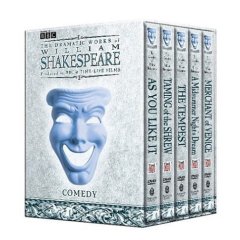
HEFTY AND FEATHERY at the same time, here's an airtight evidence of poetry's power to encapsulate anything of epic scope. One of my favorite poems from the anthology 180 More: Extraordinary Poems For Every Day (edited by Billy Collins), the following piece written by R.S Gwynn is simply nifty in summing up some of Shakespeare's masterpieces, whittling down the formidable canon to the level of a playful puzzle: a deconstructionist's romp through the ramparts of the Elizabethan verse structure that often looms like an enchanted jungle to many an English Lit major. Who says one can't graze through the wilderness of a poem, chew the cud of its subtleties, and lick one's lips with a flourish of a grin after reading? Consider this:
Shakespearean Sonnet

A father is haunted by his father’s ghost.
A boy and girl love while their families fight.
A Scottish king is murdered by his host.
Two couples get lost on a summer night.
A hunchback murders all who blocks his way.
A ruler’s rival plot against his life.
A fat man and a prince make rebels pay.
A noble Moor has doubts about his wife.
An English king decides to conquer France.
A duke learns that his best friend is a she.
A forest sets the scene for this romance.
An old man and his daughters disagree.
A Roman leader makes a big mistake.
A sexy queen is bitten by a snake.


Thursday, October 05, 2006

Raising My Bottles Of Beer To Mary Oliver

Got drunk recently, my head still reeling from the rhapsodies out of Mary Oliver's Blue Pastures, featuring 15 nourishing prose pieces "of nature, of writing, of herself and those around her." Winner of the Pulitzer Prize and the National Book Award, Mary Oliver regards this book as "biased, opinionated; also it is joyful, and probably there's despair here too..." I can only burp.


On being ruthless with one's commitment to creativity:

"It is six A.M., and I am working. I am absent-minded, reckless, heedless of social obligations, etc. It is as it must be. The tire goes flat, the tooth falls out, there will be a hundred meals without mustard. The poem gets written. I have wrestled with the angel and I'm stained with light and I have no shame. Neither do I have guilt. My responsibility is not to the ordinary, or the timely. It does not include mustard, or teeth. It does not extend to the last button, or the beans in the pot. My loyalty is to the inner vision, whenever and howsoever it may arrive. If I have a meeting with you at three o'clock, rejoice If I am late. Rejoice even more if I do not arrive at all.

There is no other way work of artistic worth can be done. And the occasional success, to the striver, is worth everything. The most regretful people on earth are those who felt the call to creative work, who felt their own creative power restive and uprising, and gave to it neither power nor time."


On being voracious for the world's feast of paradox:

"... I have found the headless bodies of rabbits and blue jays, and known it was the great horned owl that did them in, taking the head only, for the owl has an insatiable craving for the taste of brains... I know this bird. If it could, it would eat the whole world... The world where the owl is endlessly hungry and endlessly on the hunt is the world in which I live too. There is only one world."

On the identity of the chosen:

Who are you? They called out, at the edge of the village.
I am one of you, the poet called back.
Though he was dressed like the wind, though he looked like
a waterfall

On the prerequisites of becoming a poem:

"The translation of experience into contemplation, and the placement of this contemplation within the formality of a certain kind of language, with no intent to make contact-- be it across whatever thin or wild a thread--with the spiritual condition of the reader, is not poetry. Archibald MacLeish: Here is the writer, and over there--there is "the mystery of the universe." The poem exists--indeed, gets itself written--in relation between the man and the world. The three ingredients of poetry: the mystery of the universe, spiritual curiosity, the energy of language."


On the in/significance of poetry:

"Now, of course, in the hives and dungeons of our cities, poetry cannot console, it carries no weight, for the pact between the natural world and the individual has been broken. There is no more working for harvest--only hunting, for profit. Lives are no longer exercises in pleasure and valor, but only the means to the amassment of worldy goods. If poetry is ever to become meaningful to such persons, they must take the first step-- away from the materially bound and self-interested lives, toward the trees, and the waterfall. It is not poetry's fault that it has so small and audience, so little effect upon the frightened, money-loving world. Poetry, after all, is not a miracle. It is an effort to formalize (ritualize) individual moments and the transcending effects of these moments into a music that all can use. It is the song of our species."
Friday, September 01, 2006

Bagdok Bisdak!

WINDING UP the "Buwan ng Wika" celebration, the Gawad Komisyon 2006 (sponsored by the Komisyon sa Wikang Filipino) spotlighted Cebuano writing whose poets and fictionists took center stage with their counterparts in other languages from the Tagalog region, Ilocos and Pangasinan. Awarding ceremony was held at the Philippine Columbian in Manila last August 31, with guest of honor Vice President Noli de Castro.
Here's the complete list of winners in the Cebuano division: POETRY-- Michael U. Obenieta (1st), Ernesto Lariosa (2nd), Oliver Flores (3rd), Arlaine J. Obenieta, Gumer Rafanan & Angie Nellas (Honorable Mention) FICTION-- Dindin Villarino (1st), Gumer Rafanan (2nd), Marlo Geocallo (3rd), Gremer Chan Reyes, Tranquilino Udarbe, Fred F. Monternel (honorable mention)


> Photo 1: Modesty aside, yours truly (1st Prize, Poetry)

> Photo 2: With my literary "tatay" Ernesto Lariosa (2nd Prize, Poetry)

> Photo 3: With my good friend Dindin Villarino (1st Prize, Fiction)

Thursday, July 27, 2006

Let There Be Flight

Houdini hours. That's what I call those spells of wonder at the edge of awareness when words soar above the hubbub between sleep and death, striving for a consciousness uncaged.

That happens when I morph into a figurative fugitive after being caught up in the sundry details of insignificance with which the days pass us by, as if everything were merely a matter of happenstance. Yes, hapless ever after like dust in the heels of us carelessly passing through.

Still a fledgling in Poetry after 12 years so far of pursuing the birdcall of this "most sullen and solitary of art," I have been at a loss over some of my pieces too elusive to stay, resisting to be gathered as keepsakes of my greenhorn flights of fancy. As if they refused to be caged or be fixed like dead butterflies framed up on a wall. Where have all those poems gone?

Painstakingly, and even if a lot of my literary attempts often leave me flushed in the face while I wince and squirm under my skin, I have plucked out some that have refused to be towed out of my reach, stuck somewhere where I tucked them pell-mell, gathering dust and the smell of forgetting.

For better or for worse, I intend to keep these as mementos of those moments that stretch eternal out of "the white walls of silence," when my cowlick fluttered cloudward as I ventured my own version of being an escape artist out of the fetters-- tritely does it-- of merely skimming over the surface, in search of meaning and its presences.

With your indulgence, allow me to invite you to my new blog for my poetry in English: Flickers of Flight (http://brewingmyke.blogspot.com). Ayu-ayo!

Thursday, June 15, 2006

Poem For Papa and For My Sons


SEVERIANO


Summoning the metaphor of stone, his name.
It stuns my tongue to utter it, my teeth
gritting syllables of gravel. So sovereign
it is as his shout calling me back, and I’m
suddenly a child again, mouth agape and gasping
for breath as if father were a word hurled
farther away that I must run after, hurtling me
through hurts unmapped, across estranged acres
traced by trajectories of rage, and gauged by
velocities of loss. Yet the sparks of a stone-rubbed
heart strangely kindles love’s belated
light; its warmth burning this intimate wrath
until it thaws, and smoke unseethes our ancestry
of aches— our common tree— where ire, rock-
rooting, was sired. Once in a dream, I stumbled
on Grandpa’s grave, and I clawed, digging
for his bones, its heft no more than a fistful
of pebbles. Wakeful now, I’m all ears to
the absence of his voice. It roars, swearing
I’m just a chip off the old block: a stowaway
towed by a wayward streak not even the most
severe of beatings could break. Consider then
the river and its heritage of boulders.
Imagine me as the bridge over it where you,
children all forthcoming, shall meet.
Go down the water. Wash your feet.


* SEVERIANO was first published in the Philippine Panorama magazine (April 13, 1997) and later anthologized in the Likhaan: Best of Philippine Poetry and Fiction 1997 (UP Press)

Poem For Papa


INTER NOS

A static in the heart.

We’re mute, mutual as we are
with blindfolds. We’ve seen no evil
or heard while our fingers concatenate
like accidents on the switch.

Whichever channel we turn, the shift-
shape of images eludes us, deluding
the split-seconds of David Koresh, babytalk
on soaps and shampoos, Michael Jackson’s
moonwalk, the CNN war dispatch
and a teaser of a wrestling match.

Wordless, the world is
loud enough in this room
cramped but larger than death.
We’ll be one with the late-night news.
Or else, who will reveal the slaying
of the murderer, breathless
and bitter between us?

We’ll have rest at last.

* INTER NOS was first published in Home Life magazine in 1996 where it won in its Annual Poetry Competition. It’s also anthologized in In Time Passing: The Best of Home Life as well in Little Workshop, Little Critique (both books edited by Leoncio Deriada)

Monday, May 22, 2006

Writing In Time Passing

(My keynote lecture at the 13th Iligan National Writers Workshop, 22-25 May 2006)

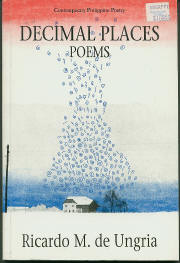
EXACTLY a decade ago, in the morning of the 3rd Iligan National Writers Workshop and Literature Teachers Conference, I sat slack-jawed and starry-eyed while all ears to the keynote lecture of the poet Ricardo de Ungria. It was like listening to a voice from the clouds spelling out the Ten Commandments. You see, when I started to dare find my own spot under the sun of poetry, I was reading—as if it were Holy Scriptures— de Ungria’s collection titled Decimal Places.

I already had the privilege to personally meet and hear de Ungria the summer before that when I got lucky enough to get a fellowship grant to the three-week national workshop in Dumaguete where—like here in Iligan— I did not care so much if my poems were deemed good or bad. What mattered to me then was to get acquainted with my literary “idols” and fellow neophytes primed for a life-long vocation with words. Of course, it didn’t hurt that my greenhorn attempts at poetry also afforded me an opportunity for free travel, meals and lodging.

For a while there, I slurped at de Ungria’s declarations that “the business of making words seems to be a heavenly venture whose pleasures, brief as they are, weigh equal to its burdens.” Now my head still swims with the dazzling torrent of insight about “sense and silence that wait at the end of words… these “pool of sounds deep in the soul that makes silence tolerable and dangerously seductive.”

First Words, that’s the title of de Ungria’s speech. And mine, this morning, are certainly not the last words.

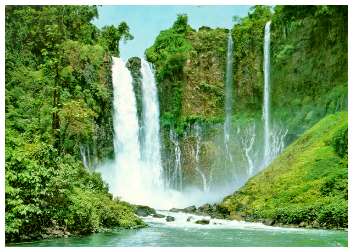
Because, whether I like it or not, what I have to say are merely continuations, a current of ongoing revelations that I’m still wading through, as drenched with wonder as when I stood witness to the flow and plunge of water from the legendary Maria Cristina Falls.

Nothing earth-shaking, my words. I can only swear of feeling what it was like to be struck by a meteor, my knees quaking as they do now, when Madame Christine Godinez-Ortiga asked me to return to this workshop and risk myself being proven undeserving to stand and speak under the long shadow of de Ungria and the succeeding keynote speakers— among them the pillars of Philippine literature who are also this workshop’s panelists.

Immodest not only the honor bestowed upon me by the organizers of this workshop but also my sneaking suspicion that I’m out of place in the company of Christine Godinez-Ortiga, Rosario Cruz-Lucero, Steve Patrick Fernandez, Victor Sugbo, Jaime An Lim, Merlie Alunan (who has spurred me on in my struggle to be unflinching in the demands of the creative life even as she has entrusted and fostered in me the nerve to help in her valiant task in Tacloban to sustain and raise the quality of creative writing in the Visayas--- particularly in the vernacular— through her program called VisWrite) and of course Linda Kintanar-Alburo (who first inspired me to amplify the sound of my mother tongue in Cebuano and to take pride in my promdi identity).

A few years from now, dear writing fellows of the 13th Iligan National Writers Workshop, there will be time to be thankful while reckoning the windfall of grace and meanings out of the mouths of the panelists. There will also be time, plenty of it, to gnash your teeth and bear the burden of choice, either to stop or to go on with the toil, the turmoil, the tightrope thrill inherent in each literary task.

From hereon, the choice is yours whether or not to go the distance and find your own truth as well as your real place under the uncertain weather of the imagination. Yes, while the planet keeps on turning, its tectonic plates continually moving along with the drift of days, the shift of seasons proceeding ever so precariously in borrowed time with the world’s wear and tear.

If you’re lucky enough to survive the greenhouse effect, a nuclear meltdown, a terrorist’s bomb, cancer and cynicism in the next ten years, one of you will come back here in Iligan to be the next keynote speaker and attempt to make a ripple deep in the heart of a new set of writing fellows.

The world will always welcome writers— even if unloved and despite the odds-- as time goes by. In fact, there’s a multitude out there, who seems scared of not making their mark, who fiddle with words to make their presences felt even if their only chance to get published is in their Internet blogs. (According to Technorati, a website tracking the so-called blogosphere, at least 750,000 new bloggers are born everyday to pour out their heart and gall, waxing literary, in cyberspace.) Even if books would be passĆ© and there would be no more trees left for making paper, many will still find and seek warmth in writing, at least, online.

Short of making fire by striking stone upon your hard-headedness, a few of you here might even be inflamed enough to carry the torch of creative writing in the country. Dreaming on to discover new literary talents, you might be awakened rudely how’s it’s like to tilt at windmills, to wear your ulcer on your sleeve and swallow your pride with your spit while you look for pockets of support to tide over your workshops in the long haul.

One of you here would probably achieve a level of success or a certain degree of notoriety, if not temerity, that could serve you well when you’re in the mood for cannibalism over the bone of contention for the next National Artist for Literature whose aesthetics or politics may not be to your taste.

This I know in my writing life so far— etiquette and the ethic for serenity in the face of strife is hardly the birthright of the tribe of writers who can be just as ruthless, not only with their creative cravings but also with their bloody appetite for one-upmanship. Squinting for enlightenment may crack the writers’ eyeglasses, but the green-eyed monster of envy and intrigue may also leave him or her with hair on the tongue for anybody preening with a Palanca or National Book Awards medal. I also know that playing politics and power-tripping are also in the bag of some writers’ tricks, and sometimes they’d even fancy flicking off and out of existence in a puff of smoke other writers—especially those who raise their stakes in national literature by believing the only way “to go global is to go local,” and who get frowned upon for being far from the madding literary crowd in Manila.

It’s a jungle out there, dear fellows, and whatever blood you may spill in this workshop might as well beef you up into licking your wounds and weaning yourself out of the milky-white notion that writing is all about sweetness and light and only for the tender or for the tame of spirit.

As always there’s no stopping the conspiracy against the compulsion for creative writing.

If you have embers in your liver enough to endure self-immolation in the altar of literature, defined by Anthony Burgess as an “aesthetic exploration of the world,” then you’ve got what it takes to withstand the coldness of condescension, intolerance, indifference. To persist in spite of alienation and displacement—this has been the defining characteristic of the creative artist true to his or her calling through the ages.

Never mind the Inquisition. Forget the exhortation of Plato prohibiting the creative writer— the poet, particularly— out of his ideal Republic, consigning to the cave those burning with creative conviction.

Never mind if your exertion in exposing authentic experience and revealing meaning—or how to make its presence felt on and off the page--- often gets whittled down to the wreckage of a deconstruction. “There’s no presence, there’s only representation,” argues the critic Geoffrey Hartman, who seems to have concurred with the philosophy of Jacques Derrida who maintained that “language is inevitably ambiguous” because, well, “There’s nothing outside the text.”

Forget the fatwa on Salman Rushdie and other fatal forms of suppression to which every writer is ever so vulnerable like, for instance, the slovenly economics of publication and the paucity of readership.

Creative writing, as far as some people are concerned, is no less futile as whistling at the deaf or winking at the blind. It makes nothing happen, so goes a poet’s lament. Truth be told, those with Promethean madness of impulse to give light to the so-called human condition have invariably run the risk of invisibility even as they strive for “visible truth” which, according to Herman Melville in a letter to Nathaniel Hawthorne, “is the apprehension of the absolute condition of present things.”

Of the way things are, the creative artist’s version of their presences seems no more substantial than smoke or mist against the public preference for representations of reality as portrayed in the tabloids and television. “Human kind cannot bear very much reality,” wrote T.S. Eliot who certainly could see “the hollow men” out of poets and story-tellers becoming a “paralyzed force, gesture without motion” in the face of public mania for escapism in a time when television and its inventions have mostly become inversions, if not misrepresentation of the real world.

True, the world wants to be entertained even as it needs to be enlightened. And that’s something the bankable Nerissa Cabral can prove now that her komiks novels, like “Bituing Walang Ningning,” have been adapted into box-office blockbusters by Viva Films and, recently, into a telenovela by ABS-CBN where a Saturday night show titled “Komiks” is now getting its fair share of the ratings with its revivals of such classic komiks serials like “Kamay ni Hilda,” “Inday Bote,” “Blusang Itim,” “Agua Bendita” and “Bunsong Kerubin.” Eat your heart out, Neil Gaiman.

Unlike many of our creative writers in ivory towers, Nerissa Cabral could see how real it was, in another time and place, for the readers of Charles Dickens’ novels to wait for its serial form, in installments, to come out at the street corner. A time when Leo Tolstoy’s Anna Karenina was a serialized novel, and Balzac, an indefatigable provider of mass-produced serializations—“gave the still unanimous writer lessons in the technique of suspense, of building to a climax.”

To get public affirmation, would the writer in this unfriendly time for reading be better off with a byline over a glaringly photographed story about rape and murder and mayhem in politics? Or, perhaps, would he rather get his dues as one of the hacks for the primetime potboilers smack in the heat of the network wars? Or how about wishing for and waiting to audition for Pinoy Big Brother: Writer Edition even if Wislawa Zysmborska has maintained that a writer’s job is hardly telegenic and hopelessly unphotogenic?

In the convenient kingdom of the sensational and the one-dimensional— in this golden age of telenovela, fantaserye and reality TV when the prosaic rules fantastic and puts under its spell both the educated and the illiterate— the easiest way to be in a time warp is to talk of the reign of reading wherein the literary artist can find his own “clean, well-lighted place” and drink to Octavio Paz’s declaration: “Poetry is the present.”

But, yes, the poet Charles Simic does affirm Paz’s inebriated effusion when he wrote: “The present is the only place where we experience the eternal. The eternal shrinks to the size of the present because only the present can be humanly grasped.”

For a sobering reality check—in the face of public fascination with fantasy and half-baked revelations of truth— Simic’s words are quite handy: “We can reach the real only by overcoming the seduction of images.”

In the future, God forbid one of you here to look back and recall with a sigh all the shoptalk about craft and admit with a sinking feeling that you have merely skimmed the surface, ultimately drowning in the guilt and regret of someone “who used to write.” Piece of cake, indeed, to eat humble pie and admit nothing’s harder than holding one’s creative grounding when the rigors of raising a family and making a living suck you into a quicksand of quotas, deadlines, bills to pay.

Then again—against your better judgment that creative writing does not pay beyond peanuts— you’d be gasping for breath in utter unbelief because the papers tell you that a witchery with words has in fact caused a wildly imaginative J.K. Rowling into becoming the richest woman in England, beating even Queen Elizabeth. And then, perhaps, you might be struck with a thunderbolt of inspiration and, taking your cue from Dan Brown’s flair for raising eyebrows, write and let yourself levitate with a controversial conjecture: That who keep on wanting to become poets or fictionist or those who keep on running writing workshops may have the bloodline of Jesus and Mary Magdalene, among other Biblical characters?

For isn’t the passion endured by some creative writers— where repression and apathy are facts of life— also a variation on a theme of crucifixion? Isn’t Veronica’s white hanky etched with the injured face of Christ an apt metaphor for the writer’s blood and snot streaked all over the whiteness of a page?

Ten years from now and beyond, way back since the dark threatened to shadow the light of faith over the Biblical declaration that in the beginning was the word, the writers will still be playing devil’s advocate against their own demise— despite the forces that propel them toward wordlessness.

Displacement may be a commonplace for literary workers in the past, present and future. But Literature has endured, along with those who prevailed by taking heed of the creative call. There’s reason and rhyme, indeed, for Gunter Grass’s proclamation: “A writer is someone who writes against the current of time.”

Monday, March 06, 2006

Three Poems

COMING TO TERMS with the cold, with its dark undertones, has been constant in my poetry. Here are variations on the theme, with a bit of revision since it first saw print on the pages of Philippine Graphic (8 April 1996) and the anthology Likhaan: Best of Philippine Poetry and Fiction 1997 (UP Press).


ALL THE UNSUNG

They come wind-
willed, without a creak
from the rusty gate.

Those who went
are here again, shouting
for their shadows.

My breath clouds over
everything when I
call back. No more

the barking dogs. I
swing the windows wide
and wonder why

the sky lately looks
starved of stars. I
gather myself,

cold. I hear nothing
but birdbone stuck in
the wind's throat.


SPECKS OF SEA

I

I remember, and the breathing
of the drowned draws the ripples.
The waves drowse no more,
wobbling the boat while the wind
blows out the weathered hats
of fishers. I stand wordless at
the breakwater's edge and hear
the burst of spume. Storms recur
in my head. Now returns all
the shipwrecked. All the dead.


II

Flitting by are swarms of fishes.
In the coral within my skull skulks
the coelacanth and I, diving
deeper, peer at it, prying it loose.
As it surges off, unhooked,
my depth-deafened ears hear
the scabrous clarity of scales. I blink,
resurfacing in the eye of the surfs.
Only the remora remains, mossy
in the rustling waters of memory.


ADDRESSED TO A NAMELESS MARINER


This is just to say how I envy the sea
gulls. Theirs is the blue of both sky and water
in one fell swoop while all I can see

are but the odds and ends of leavings: fishbones,
a litter of shells, stranded sargasso... Your bottled
letter found me among these ebbtide

souvenirs. On this usual shore. I stumbled,
tripping over it. Now I know the wind's a guide,
goading the waves on until even my feet

wavered, as when I hurled this missive, this
reply folded like a wing. May air ripple through it
like a sigh. This is just to say goodbye.

Saturday, February 18, 2006

Is Poetry the New Prozac?


DON'T WORRY, WRITE POETRY. And be happy. That, in a nutshell, is the eyebrow-raiser out of the Independent Online Edition written by Christina Patterson. Read on:

Poetry is good for your health. That, at least, is the premise of studies currently under way for the Arts Council and the Department of Health. One study, published a couple of years ago in the journal Psychological Reports, suggested that writing poetry boosted levels of secretory immunoglobin A. Another, undertaken by a consultant at Bristol Royal Infirmary, concluded that poetry enabled seven per cent of mental health patients to be weaned off their anti-depressants. Poetry, it seems, is not the new rock'n'roll, but the new Prozac.

This was not instantly evident at the ceremony for the TS Eliot poetry prize last week. Perhaps it was the strip-lighting, but the assembled throng of pasty faces and panda-shadowed eyes did little to foster a sense of radiant health. As feel-good events go, it ranked just above a tussle with your online tax return, but probably below a Thai takeaway in front of Celebrity Big Brother. It was, of course, not fair of Cyril Connolly to describe poets as "jackals fighting over an empty well", but it is true that £10,000 prizes do not, on the whole, boost the health and happiness of those who don't win.

The prize, in any case, went to a paean to psychosis. Carol Ann Duffy's collection of love poems, Rapture, is a moving and, at times, skin-crawlingly accurate portrayal of a process that psychologists have recently identified as a form of madness. We have all been there: tending the mobile "like an injured bird", repeating the name "like a charm, like a spell". For most of us, falling in love is a season in what Duffy calls "glamorous hell", and not a sojourn. We might suffer a few sleepless nights, or even eat a bit less than usual, but we can't sustain life at this pitch. And, luckily for us, our minds comply.

Many poets - a higher proportion, apparently, than of the average population - are not so lucky. John Clare, Anne Sexton, Robert Lowell and, most famously, Sylvia Plath, all knew the torments of a mind that would, on occasion, burst out of the crucible of what Freud called "normal human misery" into the nameless horrors of mania. The mad poet may be a clichƩ, but it is not a myth. Poets continue to write of their experiences of mental illness. If poetry is some kind of wonder-drug, it sure ain't working for them.

So who is making these headline-hitting assertions, and why? The answer, of course, is arts administrators, and they're doing it for money. And kindness, and the philanthropic impulse, and passion and a desire to help the lost and the lonely and the miserable and the mad. But, to do all this, you need money, and to get money you need to go to funders, and to go to funders you need studies, evidence, and results.

A current project is a good example. Poems in the Waiting Room was set up by an enthusiastic social worker eight years ago. Run, like most of these things, on a shoestring, it has had little pots of funds from trusts and foundations as well as the Arts Council, the Poetry Society and the Foreign Office. It aims are, you'd have thought, worthy and modest: to cheer up miserable places (hospital waiting rooms) at an anxious time with a little injection of art.

Their online "evaluation," however, tells a different story. Amongst a dizzying range of aims and objectives listed in its executive summary are "to gauge the external consequences of displaying poems in waiting rooms", to see "what new behaviour follows" and "what new activities". An extensive discussion of the "methodology" follows, with tables of facts and figures. The one thing, in fact, that the project doesn't allow for is for someone to read a poem and keep quiet about it. This is poetry as life-coaching. You must read and act and reach your goal. And you must do this in an act of self-improvement in which most poets, critics and readers have failed.

In a brave moment of honesty and bathos, the project's organisers assert that "the precise impact of the poems displayed... was always going to be hard to measure". The final report consists, as these things always do, of pages of anecdote masquerading as science, and ends with the hope that further funding be found. My heart went out to the organisers. Like most of us, they're simply doing their best in a league-table culture where everything is judged by results.

There is, in the right hands, a fine role for poetry as social work, but let's not pretend that it's the same as poetry as art. Poetry, like all art, is not a panacea. Perhaps it's more like homeopathy. A great placebo - some people swear by it - but the studies are inconclusive.

Tuesday, February 14, 2006

To My One and Only


MY WIFE ARLAINE, teasing as ever, asked me yesterday if I have anything romantically surprising for her today. Lemme see, I winked. Last year, we spent our Valentine's Day trying to steer clear from the stampede of lovers out for a candle-lit dinner. So we deemed it more spectacular to hie off at the sidewalk near the Fuente OsmeƱa park. There, she could only chuckle as she watched me wolfing down a burpful of balut, my lips sluicing vinegar and salt. Less costly, less cliche.

Today, I risk getting a frown from her as I resort to going back to the basic, setting out to bring her a bouquet of orange and purple mums and a box of heart-shaped chocolates in motley colors. Trite, the mother of my two sons will tell me. But, as I'll retort with yet another wink, I know she'd hum along when I'll breeze through bits of a hackneyed song: The fundamental things apply as time goes by...

And I will tell her, too, the words still hold true out of this first poem I wrote for her six years ago:


MUSING MY ONE TRUE POEM

Unless you come into me,
I have only the heart

of a blank page. The
beat
of metaphors tapping limp as the feet
of rain in the desert. The wreath
of smoke out of mirrors. The breath

of me disfigured of speech, spitting
shards or forking the words like a snake
from the pit of my tongue.

Until my touch becomes your second skin,
nothing can break you open or spurt
the seed of my silence into fruiting
the phrases only bees

and worms embrace. In the absence of words.
In the scent of flowers. In the flesh
of dreams where the dead can

teach me: To read with all ears the dance
of the shovel in a patch of paper
where a gardener burns the weeds
and a gravedigger whistles until

I can fill all that's hollow
and come into you.

Don't They Say It's Valentine's Day?


WHAT'S LOVE IF it's not something to die or kill for?

On a day like this, when the air is suffused with sweetness and light while the call of commercialism whittles down the wilderness of the heart to a cozy cage of sentiments, passion is often given a short shrift. As if it were devoid of violence out of a wrenching away from the self-centered zone of comfort. As if its beauty and tenderness weren't always threatened by danger or pain and fear of losing.

Methinks nothing's worth loving unless it spawns inside us a ruthlessness to be reckless in pursuit of our private Eden. Yes, not until it smolders enough to ignite in us a purging compulsion to endure burning. Ah, that feeling of being killed softly. Something that most love songs gloss over, sad to say.

Against the overchewed and junk-food notions of romance, here's my poem slightly revised since its publication at the Sunday Inquirer Magazine (August 27, 2000) :


PRANDIAL PIECES

I'm at your banquet because wolves
are invited, hoping your heart
is on the plate.

A toast startles you. As if stars,
falling, shattered the wine glass
you're holding.

I'll wash with the wine your bloodied
hand until your eyes suffice
to drown me.

You say the dishes are almost cold.
I reply with a burp. Suddenly,
the knife drops.

A rodent slurps on my vomit. All I care
of etiquette is when hunger devours
the heartbeat.

Friday, January 20, 2006

In Praise of Spiders


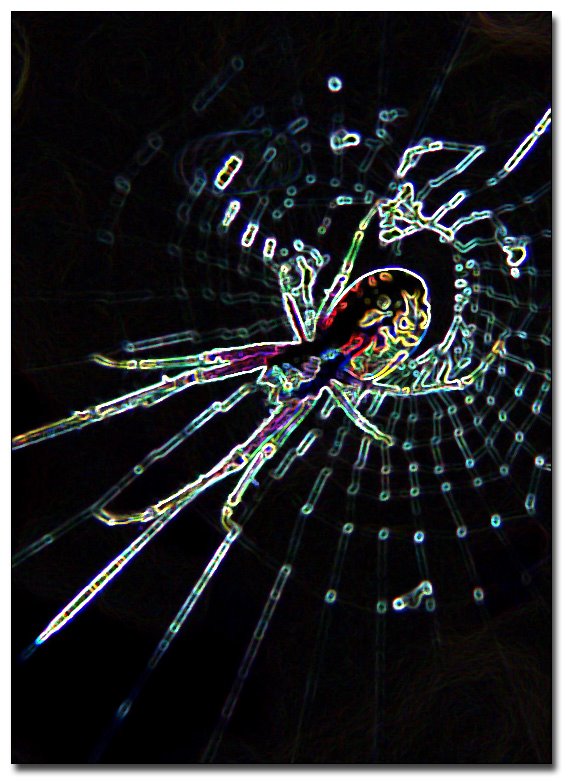
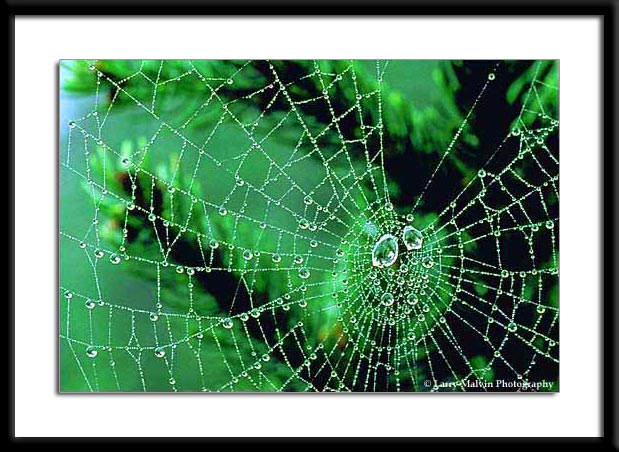
SOME SQUIRM at the sight of spiders. Creepy, they say. Never mind if those crawlies are nowhere near the tarantula's level.

Then again, I'd stick my neck out to vouch for one of the world's most overlooked natural wonders, a perfect model for order and harmony, wrought out of such silken concentration worthy of a Zen master, with such craftmanship packed at once with lethal potency and fagility enough to give monks a run for their meditation, an ode to solitude: the spider's web.

No wonder, a character in Bergman's film Through a Glass Darkly had visions of God as a giant spider.

Caught in his own fantasy, my eldest son Golli (short for Gabriel Ollivan) thinks he is Spider-Man. God bless the power of imagination. Stuck myself in the web of my own flights of fancy, I hope he'd grow up to understand and empathize in due time his father's own thread of longing for fortitude and grace.


Here's my first published poem (which I have recently revised since it was printed in the Philippines Free Press, 4 June 1994 issue) shortly after my creative writing fellowship at the 1994 National Writers Workshop in Dumaguete:


SPIDER SENSE

He thinks of how a spider makes its web, how the web is torn/ by people with brooms, insects, rapacious birds; how the spider/ rebuilds and rebuilds, until the wind takes the web and breaks it and flicks it into heaven's blue and innocent immensity.. - Stephen Dobyns


Windowing
the whiteness
of the wind,
the blind's incandescence
straight from the storm's eye as I
see a web, unspidered.


Fled from the
dead, I hear
the mourners in the living room


chanting my name.

My shadow looms in a corner,
reaching for cobwebs while

a whorl of gossamer
whirls in my head, darkly,
lest they'd see me, skull-shaven
or with hairs graying in
the wee hours
of awareness.

Tuesday, January 17, 2006

The Arrogance of Poetry

VERY BASIC. Or so Dr. Resil Mojares echoes, at the 2005 Cornelio Faigao Memorial Writers Workshop in Cebu, the smart-alecky point of a fellow writer who simplifies the complex world of a difference between prose and poetry. "Prose is planned parenthood," he grins, "while poetry is accidental pregnancy."

About that distinctive fissure or face-off in literature, Mark Halliday explains more in this reprint from The Georgia Review:


"SOMETIMES Sometimes fatigue or a journal stuffed with bad poems throws us into poetry-dismay, even poetry-disgust, but poetry soon wins us back. A good poem comes along that is damned appealing; it has charisma, it has a peculiar panache, it cuts a new path through experience, it expresses - or it is - a new truth, or new edge of truth. Life is suddenly undreary. And this poem is so strangely sure of itself! Where did it get such nerve? It has a quality I will call arrogance.

A poem, just by being a poem, says ‘I am more significant than all your chatter, all your information, all your reports and articles, more significant even than all your stories, more important than any page of Crime and Punishment or Women in Love or Middlemarch - even, in a mysterious way, more important than each of these novels as a whole. You must gaze down into the well of me. You may never see to the bottom.’

The essential sign of poetry's arrogance is white space. Poetry takes unto itself the luxurious, ostentatiously high-class option of not reaching the right hand margin. Prose must pack itself into the common area, the second-class accommodations, filling the page all the way to the margin regardless of whether it's referring to the principles of Baroque architecture or the Meaning of Meaning or what some Hollywood star wore to a premiere. The unfilled part of a poem's page is the ornamental garden surrounding the castle of superior meaning. A poem says, ‘I can drape myself in white space like a mink coat. I stand apart from the mundane tide of utilitarian utterance. I create and require a respectful silence around me.’

The arrogance of poetry is titanically oppressive in the silence immediately after a poem’s last line. That silence stares at you. It says, ‘Do you or do you not get it.’ It says, ‘Do you love me? You should. If you don't, you've missed something. The problem is yours - some blindness, some crudeness, some insensitivity to nuance.’

If a person said that to you, or if a person’s way of falling silent implied that, you would respond energetically - you would walk out of the room, or laugh in the person's arrogant face, or ask intense questions, or express remorse. Like such a person, a poem refuses to be taken casually. If you do take a poem casually, you feel slothful, shallow, flippant - a feeling that is very different from thinking hard about a poem and deciding it is itself slothful, shallow, flippant. Fortunately, persons don’t often have the gall to say, ‘If you don't love me, the problem is yours.’ Poems say this every time.

Poems keep stroking their own hair. A poem is like the person at the table who won’t speak unless everyone else hushes to listen. A poem is like the person whose tone announces: Enough of your jabber. Now I shall speak words worth remembering. You should want to chisel these words in marble.

Poetry’s demand for special attention is one aspect of its essential arrogance. Another is its pride in implication. A poem always knows - or carries - something it doesn't spell out. A poem is like someone who conveys crucial meanings with subtle changes of gaze and gesture, with eyebrows rather than words; a poem suddenly stares at you to see if you can meet its challenge. This gaze is charismatic - when it is not absurdly portentous. We are beguiled and enthralled by the poem’s sublime implicitness - when we are not irritated and repulsed.

Confronting a poem, we often have to work hard to decide whether its oddity or difficulty comes from a wonderfully forgivable, or from a repulsive arrogance. The arrogance of all poetry is tiring - like both good sex and bad sex.

Poems are mostly read by people already hooked on poetry. How does a novelist feel, reading a book of poems? The novelist may feel a puzzled respect for someone who doggedly writes a kind of literature unlikely to bring wealth or fame. At the same time, the novelist may feel annoyed when the poet offers such small things - coy, anemic perceptions and teasing metaphorical connections - as if each one were terrifically unusual - a day' s work! - enshrined by costly whiteness on all sides, commanding a hushed and riveted attention. The novelist has produced countless equally sharp images and insightful connections and richly evoked moments - hundreds in each novel! And the novelist has given these gifts to the reader without poetry's preening insistence that each morsel is a sublime Godiva truffle. The novelist may think the poetry is ‘good’ but that her own work by comparison is admirably unpompous and generous.

But Thomas Hardy, one of the few writers great as both poet and novelist, felt that greatness in poetry mattered more than greatness in prose. Isn't this an unreasonable bias?

To be calmly sensitive and thoughtful each time a poem is in front of your eyes, but to turn away for rest and refreshment before either exhaustion or cynicism sets in. This nearly angelic response is humanly possible, but it is amazingly hard to sustain.

Poems crowd toward you like the shades of the underworld when Odysseus visits; they crave the hot blood of attention.

Or they crowd toward you like refugees mobbing a United Nations worker who dispenses far too few bags of grain from the back of a truck.

Notice the inconsistency of that simile with the analogy of a poem's being like a proud high-chinned person requiring a respectful hush around his or her augustness. On the level of self-presentation, each poem is that dignitary; meanwhile, on the practical level, seen from outside, each poem is more like a famine victim in danger of being trampled beneath the feet of its fellow poems, all famished for the reader's ration of attention.

The poem seems not to have noticed its actual social situation. Picture a crowded, deafening cocktail party; in the middle of the room stands the poem, addressing itself to anyone and everyone, not even shouting, regardless of whether anyone listens. In real life this is a kind of madness. In art, it is the arrogance of art...