Staggering, the blow of statistics after a cyclone scourged Myanmar. Consider what the locals call an unprecedented nightmare: 22,500 dead so far and 41,000 people still missing.
 Last week, death and destruction also mades headlines as tornadoes whirled through the heartland of America. Just another dire reminder of our vulnerability against nature as our ravaged planet alerts us once more with its recurrent distressed call. Are we listening? Doesn't what happened in the Day After Tomorrow ring a bell? If we still think the worst is the stuff of movies only, we're in for some rough reality check. Hope floats, yes, and may it stay that way a little longer than the glaciers and polar caps in the shiftscape of Antartica.
Happy endings? It's up to us, really. Or so dares another documentary in the wake of An Incovenient Truth. If what's rendered loud and clear in The 11th Hour are any indication, we have more than enough reason to pray what we see isn't what we now get:
FOR THE LIVING who are no better than those who rest in peace, here's my All Souls' Day column in the opinion page of Sun.Star Cebu:
 RestlessIf he were a ghost, his grimace seemed not enough to spook City Hall into action.
“I would like, at least, to have my complaints noted and my questions answered,” rues a certain Alvin John Osmeña who hopes for city officials’ attention so they can “address the recurring problem on noise.” All that sound—loud music played inside vehicles and highly sensitive car alarms—reportedly bothers him wherever he is.
Must he consign himself to wait until he’d be six feet under before he’d experience what it takes to be tranquil?
That his grievances have fallen on deaf ears is indication enough that City Hall ought to be reminded what Desiderata intoned so solemnly: “Remember what peace there may be in
silence.”
But as its ears register nothing less than high frequency of the forthcoming Asean Summit, is City Hall up to the challenge for calm?
Isn’t its desperate need to live up to expectation or to prove that the city is no cemetery of progress a symptom of modern world’s neurosis?
It’s supposed to be a luxury, but taking things slow has become a liability. The go-getting mania has rendered it quaint to quell the cliché and, yes, smell the flowers. The quick and the dead, alas, have one thing in common: Too unconscious to find loveliness in their ornate funeral wreath.
Who has time to catch a whiff of grace as we reek of rage throughout our constant brush with rush hours, deadlines, quotas? Blessed are the departed, indeed, for having gone past the zone of discomfort Thoreau scoffed at: “The mass of men lead lives of quiet desperation.”
Indeed, pity the taxpayer in dire need for an accessible refuge in the midst of the city’s hustle and bustle. Where are our public spaces with trees to sit under? Breezy does it, if you ask the dead in memorial parks from which real estate developers are literally making a killing.
 Indeed, anguish is when we have to puncture our eardrums to the feet-stomping tune of “Let’s Get Loud” so that we get a kick out of the doldrums. Ah, doesn’t that explain our private emergencies to lull ourselves with our iPod so can we insulate our head and shut the hysterical world out of our ears?
Hear, too, the prognosis from the World Health Organization: Depression will soon be the second leading cause of disability in the world where suicide ranks as the third leading cause of death among dismally spirited adolescents.
“Quiet is going extinct,” says Gordon Hempton, an acoustic ecologist who’s espousing a campaign on behalf of American parks called “One Square Inch of Silence” meant to protect a tiny spot of serenity from man-made sound. “I wanted to find a quiet place and hang on to it and protect it.”
Man, he’d better be dead than find himself fuming from both ears here this side of purgatory. (31 October 2006, Sun.Star Cebu)
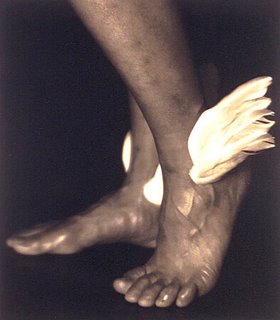 WHO says one has to grit one's teeth and be aggressive to wear courage on one's sleeve? Give yourself a break, man. Or kick yourself if you deem it beneath you, as graceless as losing face, to hold your ground when the going gets rough.
Being tough is tritely macho. Or so avers Mr. Somchai, an Aikido master, at the recent 1st Fukakusa Shihan Aikido and Weapons International Seminar in Cebu. There's more to bravery than meets a black eye.
"Running away is the best form of self-defense," stresses Mr. Chomsai after he demonstrated a move to escape from several aggressors and exited as if nothing happened. “The Aikido philosophy is of peace, harmony and unit,” Mr. Somchai explained. “If you are trapped, defend yourself but if you can still run, then run.” Weaseling away from a fight is not a cowardly act, agrees Giovanni Capannelli, an Italian fouth dan aikikai and senior economist of the Asian Development Bank.
You bet, I'm on my feet.
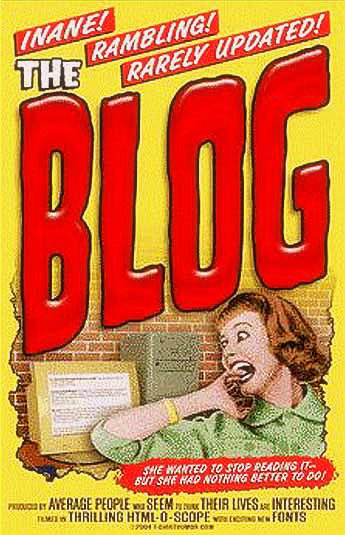
WHEN BLOGS RULE, we'll all talk like... Thus Daniel Henninger, deputy editor of Wall Street Journal, waxes elliptical in his article titled, "Disinhibition Nation." Here's more than meets your rolling eyeballs:
 Kevin Ray Underwood, the repressed Oklahoma cannibal, kept an Internet "blog" of his compulsions for years before kidnapping and killing a 10-year-old neighbor last week. On his blog, Kevin wrote a lot about Kevin: "The reason for my lackluster social life is a severe case of social anxiety and depression. I'm on medication now, which helps a lot. Well, in ways."
I don't think the blogosphere is breeding cannibals. But it looks to me as if the world of blogs may be filling up with people who for the previous 200 millennia of human existence kept their weird thoughts more or less to themselves. Now, they don't have to. They've got the Web. Now they can share.
Technorati, a site that keeps numbers on the blogosphere, reports that as of this month the number of Web logs the site tracks is 35.3 million, and doubling every six months. Technorati claims each day brings 75,000 new blogs. We know something's happening here but I'm not sure we know what it is.
Typically, a blogger creates a Web site and then, in the pale glow of a PC screen, types onto a keyboard what's on his or her mind. A blog nearly always invites readers to share their "comments," which they do, and which the blogger posts seriatim. People in my business tend to think blogging is mostly about politics on sites such as Wonkette, the Huffington Post or the Daily Kos. There are highly intellectual blogs, such as the Becker-Posner Blog, run by Nobel economics laureate Gary Becker and federal judge Richard Posner. Their April 16 post is titled "Tax Complexity and the Cost of Compliance," with comments.
 But in a "Blogs Trend Survey" released last September, America Online reported that only 8% blog to "expose political information." Instead, 50% of bloggers consider what they are doing to be therapy. Some might argue that using the Internet to self-medicate includes many nominally political blogs, but more on that shortly.
Not surprisingly, a new vocabulary has emerged from clinical psychology to describe generalized patterns of behavior on the virtual continent. As described by psychologist John Suler, there's dissociative anonymity (You don't know me); solipsistic introjection (It's all in my head); and dissociative imagination (It's just a game). This is all known as digital identity, and it sounds perfectly plausible to me.
A libertarian would say, quite correctly, that most of this is their problem, so who cares? But there is one more personality trait common to the blogosphere that, like crabgrass, may be spreading to touch and cover everything. It's called disinhibition. Briefly, disinhibition is what the world would look like if everyone behaved like Jerry Lewis or Paris Hilton or we all lived in South Park. Example: The Web site currently famous for enabling and aggregating millions of personal blogs is called MySpace.com. If you opened its "blogs" page this week, the first thing you saw was a blogger's video of a guy swilling beer and sticking his middle finger through a car window. Right below that were two blogs by women in their underwear.
 In our time, it has generally been thought bad and unhealthy to "repress" inhibitions. Spend a few days inside the new world of personal blogs, however, and one might want to revisit the repression issue.
The human species has spent several hundred thousand years sorting through which emotions and marginal neuroses to keep under control and which to release. Now, with a keyboard, people overnight are "free" to unburden and unhinge themselves continuously and exponentially. One researcher quotes the entry-page of a teenage girl's blog: "You are now entering my world. My pain. My mind. My thoughts. My emotions. Enter with caution and an open mind."
The power of the Web is obvious and undeniable. We diminish it at our peril. But what if the most potent social effect to spread outward from the Internet turns out to be disinhibition, the breaking down of personal restraints and the endless elevation of oneself? It may be already.
Disinhibited vocabulary is now the normal way people talk on cable TV, such as on "The Sopranos" or in stand-up comedy. On the Web and on the street, more people than not talk like this now. What once was isolated is covering everything. No wonder the major non-cable networks are suing to overturn the FCC's decency rulings; they, too, want the full benefits of normalized disinhibition. Hip-hop, currently our most popular music form, is a well-defined world of disinhibition.
Then there's politics. On the Huffington Post yesterday, there were more than 600 "comments" on Karl Rove and the White House staff shake-up. "Demoted my --- the snake is still in the grass." "He should be demoted to Leavenworth." "Rove is Bush's Brain, and without him, our Decider-in-Chief wouldn't know how to wipe his own ----." 
From a primary post on the same subject on the Daily Kos, widely regarded as one of the most influential blogging sites in Democratic politics now: "I don't give a ----. Karl Rove belongs in shackles." "A group of village whores have taken a day off to do laundry."
Intense language like this used to be confined to construction sites and corner bars. Now it is normal discourse on Web sites, the most popular forums for political discussion. Much of this is new. Politics is a social endeavor. The Web is nothing if not "social." But the blogosphere is also the product not of people meeting, but venting alone at a keyboard with all the uninhibited, bat-out-of-hell hyperbole of thinking, suggestion and expression that this new technology seems to release.
At the risk of enabling, does the Internet mean that all the rest of us are being made unwitting participants in the personal and political life of, um, crazy people? As populist psychiatry, maybe this is a good thing; the Web allows large numbers of people to contribute to others' therapy. It takes a village. But researchers note that the isolation of Web life results in many missed social cues. It is similar to the experience of riding an indoor roller coaster, what is known in that industry as a "dark ride." This dark ride could be a very long one.
 WHAT MAKES US TICK as a people may make some of us feel sick. So goes the crux of my column tomorrow in Sun.Star Cebu: It's as awry as a sore thumb sticking out, but mirth in the face of misery is one peculiarity so patently Pinoy. Absurd enough, true, to baffle even the Greeks who symbolized theater as a tragicomic pair of masks.
Consider, for instance, those television footages straight from an accident or crime scene. See how the reporter intones the ill-starred subject of the story while a bustle of kibitzers at the background jostles for their fair share of the camera, waving and winking or striking a chin-up pose worthy of Mr. Suave. That happened, yes, in the wake of the Wowowee stampede. A grinning face or two, that’s also starkly visible in the front-page photo of the Philippine Daily Inquirer yesterday counterpointing the utter despair of those waiting for upbeat possibilities about survivors in the Southern Leyte landslide.
Here’s where the Grim Reaper seems to have trouble with being taken seriously. As if tragedy were a freak force of nature, a pratfall or an outlandish piece of rumor out of a clown’s lopsided mouth.
In this grin-and-bear-it country where stand-up comics are more compelling than politicians and where cartoonists can best interpret our socio-economic state, being hapless is something most of us endure with unbearable lightness. As if, on the heels of man-made or natural disasters with a ho-hum rate of recurrence, yet another sorrow can be shrugged off thus, “So what else is new?”
Be merry today, tomorrow is another sloppy trick up a freak’s sleeve. Or so many of us with a happy-go-lucky binge seem to believe. Recall a recent article from Time Magazine, explaining why Filipinos consistently top national happiness surveys compared with the rest of the world despite poverty, calamities and countless other reasons to wallow in the slough of despond. We can even die laughing.

We’re gracefully tough as the bamboo, true. We suffer fools gladly, and we can win Olympic medals if being easily amused and self-sufficient were up for competition.
"Around the world, people are searching for happiness,” writes Alan C. Robles. “For Filipinos, happiness isn't a goal: it's a tool for survival.”
The Flintstones might as well be Filipinos, who knows?
 DON'T WORRY, WRITE POETRY. And be happy. That, in a nutshell, is the eyebrow-raiser out of the Independent Online Edition written by Christina Patterson. Read on:
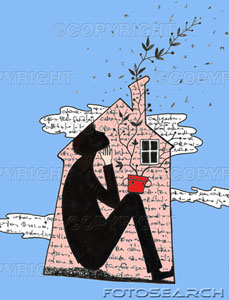
Poetry is good for your health. That, at least, is the premise of studies currently under way for the Arts Council and the Department of Health. One study, published a couple of years ago in the journal Psychological Reports, suggested that writing poetry boosted levels of secretory immunoglobin A. Another, undertaken by a consultant at Bristol Royal Infirmary, concluded that poetry enabled seven per cent of mental health patients to be weaned off their anti-depressants. Poetry, it seems, is not the new rock'n'roll, but the new Prozac.
This was not instantly evident at the ceremony for the TS Eliot poetry prize last week. Perhaps it was the strip-lighting, but the assembled throng of pasty faces and panda-shadowed eyes did little to foster a sense of radiant health. As feel-good events go, it ranked just above a tussle with your online tax return, but probably below a Thai takeaway in front of Celebrity Big Brother. It was, of course, not fair of Cyril Connolly to describe poets as "jackals fighting over an empty well", but it is true that £10,000 prizes do not, on the whole, boost the health and happiness of those who don't win.  The prize, in any case, went to a paean to psychosis. Carol Ann Duffy's collection of love poems, Rapture, is a moving and, at times, skin-crawlingly accurate portrayal of a process that psychologists have recently identified as a form of madness. We have all been there: tending the mobile "like an injured bird", repeating the name "like a charm, like a spell". For most of us, falling in love is a season in what Duffy calls "glamorous hell", and not a sojourn. We might suffer a few sleepless nights, or even eat a bit less than usual, but we can't sustain life at this pitch. And, luckily for us, our minds comply.
Many poets - a higher proportion, apparently, than of the average population - are not so lucky. John Clare, Anne Sexton, Robert Lowell and, most famously, Sylvia Plath, all knew the torments of a mind that would, on occasion, burst out of the crucible of what Freud called "normal human misery" into the nameless horrors of mania. The mad poet may be a cliché, but it is not a myth. Poets continue to write of their experiences of mental illness. If poetry is some kind of wonder-drug, it sure ain't working for them.So who is making these headline-hitting assertions, and why? The answer, of course, is arts administrators, and they're doing it for money. And kindness, and the philanthropic impulse, and passion and a desire to help the lost and the lonely and the miserable and the mad. But, to do all this, you need money, and to get money you need to go to funders, and to go to funders you need studies, evidence, and results.
A current project is a good example. Poems in the Waiting Room was set up by an enthusiastic  social worker eight years ago. Run, like most of these things, on a shoestring, it has had little pots of funds from trusts and foundations as well as the Arts Council, the Poetry Society and the Foreign Office. It aims are, you'd have thought, worthy and modest: to cheer up miserable places (hospital waiting rooms) at an anxious time with a little injection of art.Their online "evaluation," however, tells a different story. Amongst a dizzying range of aims and objectives listed in its executive summary are "to gauge the external consequences of displaying poems in waiting rooms", to see "what new behaviour follows" and "what new activities". An extensive discussion of the "methodology" follows, with tables of facts and figures. The one thing, in fact, that the project doesn't allow for is for someone to read a poem and keep quiet about it. This is poetry as life-coaching. You must read and act and reach your goal. And you must do this in an act of self-improvement in which most poets, critics and readers have failed.
 In a brave moment of honesty and bathos, the project's organisers assert that "the precise impact of the poems displayed... was always going to be hard to measure". The final report consists, as these things always do, of pages of anecdote masquerading as science, and ends with the hope that further funding be found. My heart went out to the organisers. Like most of us, they're simply doing their best in a league-table culture where everything is judged by results.
There is, in the right hands, a fine role for poetry as social work, but let's not pretend that it's the same as poetry as art. Poetry, like all art, is not a panacea. Perhaps it's more like homeopathy. A great placebo - some people swear by it - but the studies are inconclusive.
 Last week, death and destruction also mades headlines as tornadoes whirled through the heartland of America. Just another dire reminder of our vulnerability against nature as our ravaged planet alerts us once more with its recurrent distressed call. Are we listening? Doesn't what happened in the Day After Tomorrow ring a bell? If we still think the worst is the stuff of movies only, we're in for some rough reality check.