Monday, August 28, 2006

Off-Limits, Anyone?

DISPLACEMENT doesn't need distance. It's an urban commonplace where estrangement and enmity happen with the frequency of a fire alarm or the screaming siren of an ambulance. Here's a reprint from my latest opinion column in Sun.Star Cebu (29 August 2006 issue):


Crash Hours

Thank the heavens we’re no planets, or we’d be on a collision course more often than we hear prophets of doom about the world’s end.

Long before scientists bumped off Pluto from the planetary clique, and whittled it down to size as merely a “dwarf planet,” our own world has been getting smaller. To the level of the trivial goes our trite tendency for turf wars and clan rivalries, after all. As if we were aliens among ourselves hardwired for each other’s invasion.

Why, here this side of the equator, even a parking space becomes a battleground. Or so it seems to the son of Cebu’s governor and the chief of the Criminal Investigation and Intelligence Bureau (CIIB) who were in the mood for Star Wars in front of the entrance of an uptown bar one recent night.

Hotheads of the world, unite; you have nothing to lose but your cool.

True, it’s getting cramped in here up to a choking point, and spitting fire comes breezy where there’s barely a breathing space for a handshake. We’d never run out of bones for each other’s contention, and going to the dogs seems to be the only way to push borders, if not to stretch our threshold of tolerance or patience.

Finding a place or even a day unbroken by the usual outbreak of hostility looks like a blind wager while astronomers now get more elbow room to redefine and render obsolete our notion of the solar system.

Talk about finding a place under the sun, and we might as well cover ourselves against ultra-violent rays with newspapers perennially stifling and blood-stewing from the prerequisites of conflict.

Space is of the essence, but that sounds as esoteric as astral travel where there are hardly public places to sit down awhile under a tree and to let the ill wind stirring in one’s head to scatter in the manner of dry leaves.

If looking for a parking space gets as dizzy as steering one’s way out of labyrinths, as motorists can attest, finding a park could be the fastest way to reach a dead end. Or, to rub elbows with lovers, licit or otherwise, whose threadbare intimacy and privacy are frayed at the edges by the invasion of the city’s derelicts and perverts bracing for their prey.

Spaced-out. That’s what one intuits while loitering through the heart of the metro where the homeless, beggars, and vendors might as well have raised their stakes in the sidewalks and overpasses. The bottleneck, clearly, is not only down the road where rage goes with the exhaust fumes.

Getting into each other’s way, unlike planets in their respective orbits, there’s plenty of time and lot of space only for breathing smoke down each other’s necks.

Friday, August 04, 2006

Bona Comes Back

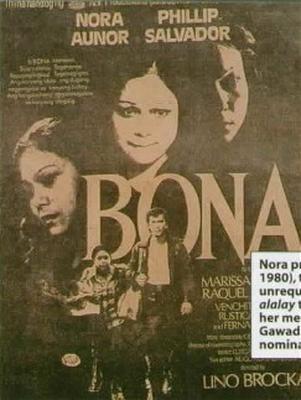
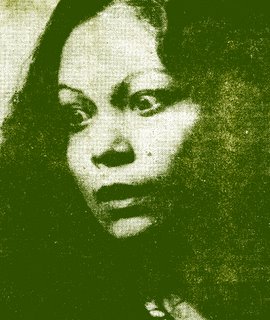
C ited as one of the "Best 100 Films in the World" by the Museum of Tolerance (Los Angeles, USA) , Lino Brocka's Bona highlights the hapless plight of film archiving in the Philippines. Sadly, the country holds no copy of this gem of a film which has been acclaimed in various international film festivals like Cannes and Torino. There's hope, however, that the present generation would still have the chance to see it.

From a recent private screening of Bona, Ateneo professor and anthropologist Tito Valiente takes a second look at one of the most celebrated Filipino films (shown in 1980) in his recent column in Business Mirror (3 August 2006). Here goes the reprint:


Native Returns

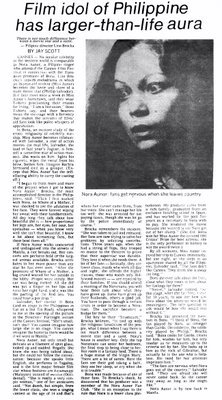
At the lobby of Studio 1 of ABS-CBN, a table draped in a wide swath of cloth cradled flowers. Around it were posters of a film copied from old newspapers. A man in business clothes was standing still beside one of the photos. That was the closest they could get near the horizon of a person called Nora Aunor. That night, a copy of Bona, the movie produced by Aunor and directed by Lino Brocka was going to be screened, the copy provided by Cinematheque Française, a film institution in France that archives excellent cinema. (Bona will have its cable television premiere in the Sunday Cine Premiere block of Cinema One on August 20 at 8 pm.)
As with the other guests filing in, people were there with similar purposes. There were the young cineastes who may have read the reviews of Bona in various film journals and web sites and blogs, for Bona is one of the most dissected Filipino films. These people may have cited the film as one of their favorite works even if they had not seen it previous to this evening. The sheer presence of the film in the minds and essays of writers and critics was enough to convince them that they were dealing with a work that was benchmarked and graded according to accepted international aesthetics. But there were also middle-aged men moving as one, looking like pilgrims about to approach the inner sanctum of the shrine. They were so quiet that you could feel through their movements the grace of many a Nora Aunor cinematic outings. These are people who could utter word for word, grand inflection for grand inflection, the dialogues that their idol—in the sense of worship and reverence—gave voice to on the silver screen.

It was not merely a voice coming from a body. Nora’s voice in many films, including those that were sinfully trivial and fun, slithered and sauntered out of the screen and into the domain of the popular, the populist, the political. The lines, as well as the characters, from which those meanings sprung transcended the instrument of cinema and became part of the collective yearnings of a mass audience who saw in Aunor not just an actor but someone equipped with a divining rod that could trace the fault lines of a group of people even as it would direct them to the wellspring of their neurosis and salvation. Aunor’s much-documented celebrity was going to go through a reassessment that night, to check if the books—and essays and poetry—written about her icon were really truthful valuation of her person and her genius and not simply the ranting of academics trying out new theories about popular culture.

Seated as I was at the orchestra, surrounded by fans, I could sense the undertow of nervousness in those faces upturned to the screen; there was also sadness and longing. Most of the people there, I believe, were perched at the edge of their seats, the gurgling in their hearts pushing them almost to the edge of a sweetly welcomed nervous breakdown. Again that night, some simply ceased to be film viewers and moved on to be witnesses of an apparition.

A history of tastes

The metaphor of the sacred, the discourse of power, and the narrative of dispossession apply to the audiences of Bona as well as to the film.

The film opens with the male-dominated procession of the Black Nazarene of Quiapo. Men are throwing their shirts and towels onto the carriage of the Christ icon, to be wiped against the body of the icon. Then the face of Aunor, as Bona, is shown, lost in the crowd, but not lost in the ritual. The next scenes bring us to what preoccupies Bona (other than a religion in display). She is seduced by another faith, as she displays to us an almost reverential and awe-stricken admiration for a bit-player, Gardo. Critics use the word “obsession” to process the relationship that brings Bona to Gardo. But viewing the film again gives us other words. Like irrationality. Like lust and love.

You know, of course, the story. How, one night, Gardo comes home and tells Bona that he is leaving for abroad, and she should just go home. Then how Bona looks at the boiling pot of water. And the rest is cinematic history. Part of this history is that Bona the film and Aunor as Bona have become guideposts for the evolution of film-viewing and re-viewing in the Philippines. Go and run to the nearest library and catch the writeups of that period, when Bona was first screened commercially, and you will see how so much of the appreciation of the film went beyond and behind the cinema.

Reporters then wrote how Aunor had to produce the film to convince people that she could act. And yet, Bona was produced in 1980, a full three years after Aunor thundered through the screen in Tatlong Taong Walang Diyos, and went on to win the Urian for Best Actress that year.

The screening answers many questions but also opens up many more. Given how the screenplay displays an almost reckless disregard for coherence, one could ask now if Brocka really enjoyed Aunor in the film. The film looks like it is meant to showcase another talent, that of Phillip Salvador, thus bringing some critics to describe the film as his film. One could even wonder why Brocka and the writer chose a bit player as the object of Bona’s adoration. This preoccupation with Salvador, however, becomes the bane of the movie.

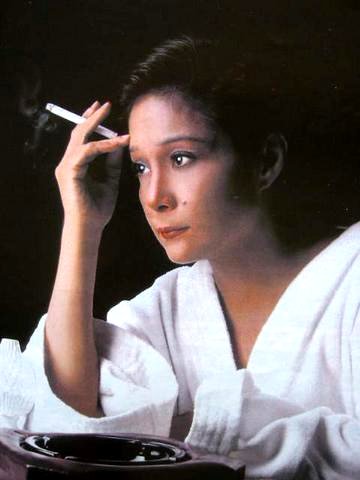
At the end, Bona is indeed Nora Aunor’s work. Bona is Aunor looking, with a bit of melodrama and masochism, how she, an unknown, has become the object of many people’s adoration, the actor becoming the icon.

The power of the tragedienne/icon in Aunor is that she is able to weave a character into a full functioning tapestry of nerves and magic. Even then, you cannot blame those who genuflect before her when they cite the many gems in Bona. There is Aunor running away from her father, the speed of her escape as frantic and funny as it was demented. Aunor looking from the fence into her home where the wake for her father is taking place, fear and love and anxiety etched in a shot that merely shows one half of her face. Aunor peeking from the kitchen, tension personified, the rigid figure melting into the loneliest of embraces with her mother, played with brittle tenderness by Rustica Carpio. Then, there is that scene—when she throws the boiling caldron of water onto Gardo’s body, the wretchedness on her face a troubling chemistry of dementia and despair, and a rage that seems to travel from her scarred soul, in a nuanced form that only Aunor could summon.

You can look for more, but at the end, there is one lesson: Nora Aunor is second to none and no one follows after her. Not yet, anyway. I knew this when I stepped out of the Studio One into the lobby once more. The table that held the flowers was shrouded in black, more like in mourning for the passing of good films that we used to make, and for an actor like Aunor, whose genius might as well be dead in our dreary landscape of commercialism and bad taste.


*** Photos culled from the blogs of Willi Pascual and Jojo de Vera as well as the archive of the International Circle of Online Noranians (ICON) e-group.

Thursday, July 27, 2006

Let There Be Flight

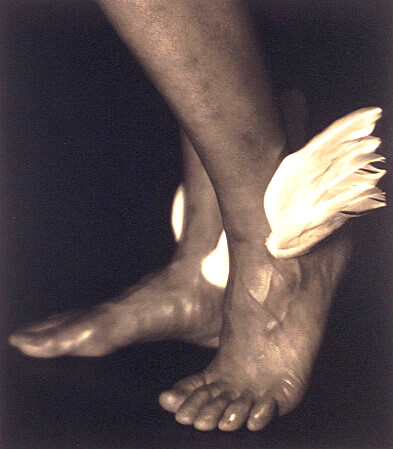
Houdini hours. That's what I call those spells of wonder at the edge of awareness when words soar above the hubbub between sleep and death, striving for a consciousness uncaged.

That happens when I morph into a figurative fugitive after being caught up in the sundry details of insignificance with which the days pass us by, as if everything were merely a matter of happenstance. Yes, hapless ever after like dust in the heels of us carelessly passing through.

Still a fledgling in Poetry after 12 years so far of pursuing the birdcall of this "most sullen and solitary of art," I have been at a loss over some of my pieces too elusive to stay, resisting to be gathered as keepsakes of my greenhorn flights of fancy. As if they refused to be caged or be fixed like dead butterflies framed up on a wall. Where have all those poems gone?

Painstakingly, and even if a lot of my literary attempts often leave me flushed in the face while I wince and squirm under my skin, I have plucked out some that have refused to be towed out of my reach, stuck somewhere where I tucked them pell-mell, gathering dust and the smell of forgetting.

For better or for worse, I intend to keep these as mementos of those moments that stretch eternal out of "the white walls of silence," when my cowlick fluttered cloudward as I ventured my own version of being an escape artist out of the fetters-- tritely does it-- of merely skimming over the surface, in search of meaning and its presences.

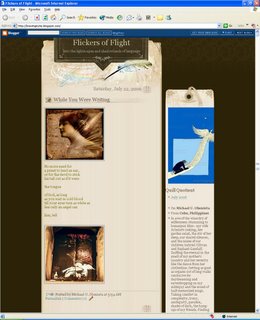
With your indulgence, allow me to invite you to my new blog for my poetry in English: Flickers of Flight (http://brewingmyke.blogspot.com). Ayu-ayo!

Saturday, July 15, 2006

Viva Bisdak!

GO KICK me with this shamelessly indulgent tidbit, and I don't mind at all if you take it with a lemon-twisted grain of salt.

It doesn't happen all the time, anyway: one's blog being chosen Cebu Site of the Fortnight (July 15 - July 31, 2006).

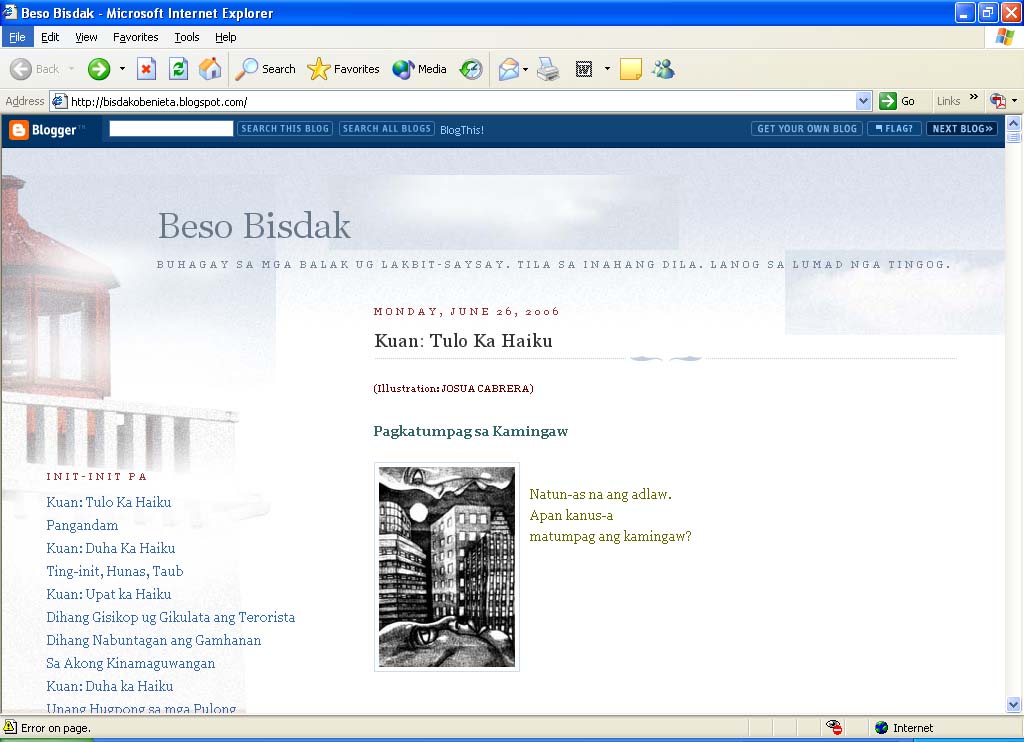
Bitaw bay, Wa'y Blima! Cebu (the leading web portal to Cebu) has singled out Beso Bisdak-- my online cauldron of creative writing in Cebuano-- "selected from the Cebu Web Directory on the basis of criteria such as quality of content, design, and relevance."

And all the while I thought only a stray cat gives a rat's tail of a chance to bother about anything that reek of Cebuano.

Therefore, allow me in gratitude to pay the previlige forward by recommending another site by a fellow who rocks and rolls with his Bisdak identity.

He needs no intro, my colleague Insoy whose band (Missing Filemon) has been at the rears and flanks of this tsunami in the local music scene. "Bisrock," it's called. Right off the bat, that's the talking point as Insoy's blog Insoymada launches a new section in Q-and-A format.

It's where Insoy keeps "important "conversations" with people and friends whose opinions matter, and those whose opinions are so trivial that they matter." For the maiden interview, my friend Januar Yap (who coined the word Bisrock) takes the bloglight. Na hala, padayon, labyog Bisdak!

Tuesday, July 04, 2006

Amen To Ambiguity

(A reprint from my column today in the opinion page of Sun.Star Cebu)

When one’s value judgment shakes in the wind of controversies now threatening to pummel one’s faith cold, certitude has become such a lonely word.

So what’s the last word about a former parish priest in Danao town who has been sneaking under the shadow of his dalliance with a young lady? Or, about the case of another local priest—now circulating again in the Internet— who’s still under the pall of accusations by two altar boys he allegedly slept with some two decades ago in the United States.

In spite of all that, however, the faithful is still coming in droves, filling up the pews every Sunday here in this so-called Cradle of Christianity; our minds stubborn over matters too smeared for headlines and scoops to gloss over. Only the heavens know. Or so we seem to say, our eyes shut in prayer so that what remains of our faith won’t be frayed any further.

For those waiting for moral certainty, up goes the dare to be detectives. And, yes, to be hawk-eyed while hoping for discernment. Consider the point raised by Jewish theologian Abraham Heschel: “The cardinal issue— Why does the God of justice and compassion permit evil to persist— is bound up with the problem of how man should aid God so that his justice and compassion prevail.”

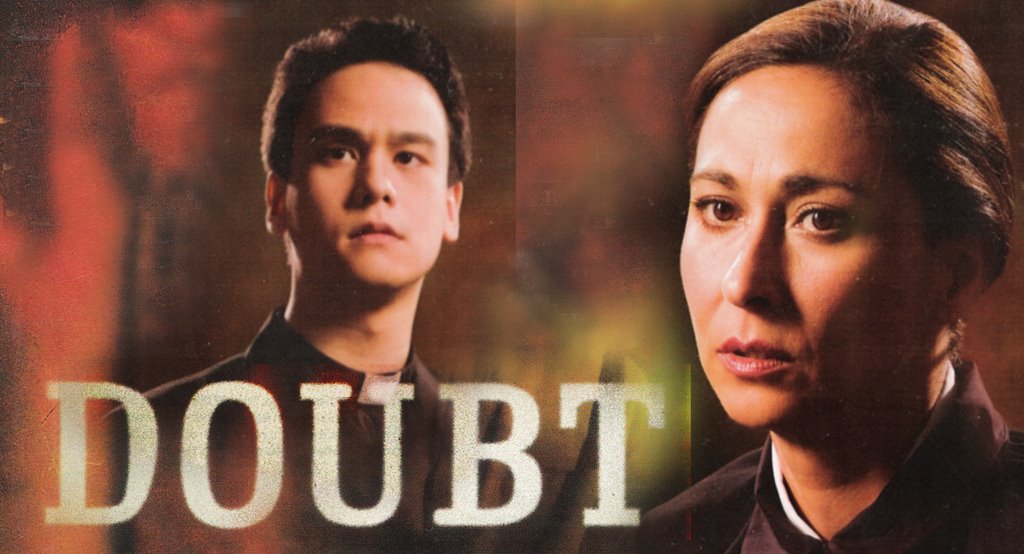
As if raising smoke out of the burning issue these days, John Patrick Shanley’s acclaimed play titled “Doubt” couldn’t be timelier. Brought to Cebu by Little Boy Productions, Shanley’s Pulitzer Prize-winning work deftly dramatizes how tricky the matter of truth can be. As an opportunity for soul-searching, Shanley suggests, nothing beats ambiguity.

Set in a Catholic school in Bronx, the conflict in the play is kicked off with the suspicion of the rigidly no-nonsense principal Sister Aloysius (in a fiery performance by Cherie Gil). Wary of Fr. Flynn, the boys’ basketball coach, she has sensed something fishy between him and the school’s only black boy.

What ensues unravels like a witch-hunt until the nun’s conscience gets wracked with her white lie triggering the priest’s resignation, casting a dark spot on Fr. Flynn’s claim of innocence. But up to the end, Shanley leaves the viewer with no clear-cut proofs of either the nun’s moral ascendancy or the priest’s guilt. Evidence remains inconclusive, the sense of disquiet dares the audience to go back and wrestle with the words of Fr. Flynn's sermon at the start of the play: “What do you do when you are not sure?”

That’s a challenge many of us had to confront head-on in this season so rife with confusion.

~~~ 000 ~~~

From my inbox, here’s a bit of reminder or reality check about a God who does not discriminate about who he uses. The next time we shake our heads in uncertainty, here are characters from the Bible who seem up to no good:


Noah was a drunk. Abraham was too old. Isaac was a daydreamer. Jacob was a liar. Leah was ugly. Joseph was abused. Moses had a stuttering problem. Gideon was afraid. Samson had long hair and was a womanizer. Rahab was a prostitute. David had an affair and was a murderer. Elijah was suicidal. Isaiah preached naked. Jonah ran from God. Job went bankrupt. John the Baptist ate bugs. Peter denied Christ. The disciples fell asleep while praying. The Samaritan woman was divorced, more than once. Timothy had an ulcer. And Lazarus was dead!

Monday, June 26, 2006

From Rapture To Rupture

If you've got the temerity for a tightrope pirouette and the gall to imagine yourself a contender for the reality show Fear Factor, it wouldn’t be too farfetched to see a camel entering the eye of the needle. Or, the hole of a wedding ring.

Long before Sun.Star Cebu sent shivers down the spines of singletons with its recent three-part series called “Going Solo” — proving there’s an epidemic of unhappiness in the city enough to make annulment lawyers grinning their way to the banks— a whole galaxy of words has coalesced into a common fact: Marriage is a matter of courage.

Forget the flair of the wedding planner who, having read too much romance novels or seen her immodest share of Hollywood potboilers, will have the prospective couple believe that everything in the glossy magazine or in her favorite teleserye is true. Ah, the mirage of two minds admitting no impediment to the pleasure principle in this era of advertising.

Truth be told, no wedding planner takes care about what happens next because it’s really up to the couple concerned to make a sense of rhythm and order, a cosmos out of the chaos theory so true to the frowns of feminists and the caution of the commitment-phobic.

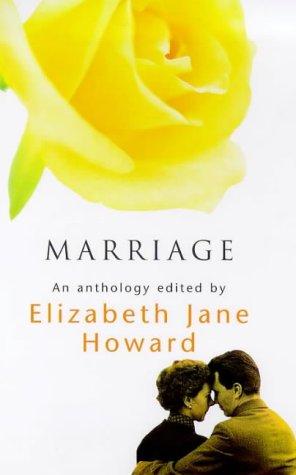
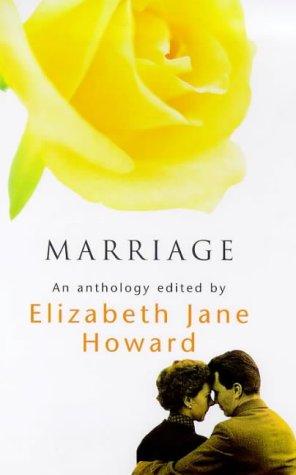
“It is the most challenging relationship any of us attempt in our lives, and an increasing number of us seem to fail,” goes the blurb of Elizabeth John Howard’s book Marriage, titled simply thus as if to leave no room for further complications. It’s one of the gifts my wife and I received when we agreed to go headlong into our common adventure against the unknown four years ago.

It’s a jungle out there after the wedding photographer finds another client for a funeral, probably of someone who succumbed to the sweet hereafter in the wake of sleeping with snakes or swimming together with piranhas. Or so agree with a cuss “practically one couple every 24 hours” who kick themselves to Splitsville, as cited in the special report.

When one writer defined courage as a “conquest of fear,” he might as well have described marriage as a mind-over-matter engagement with reality at the risk of losing one’s head. Or, against the slings and arrows of domestic fortune, ducking under the matrimonial bed. If you don’t have the mind—or the moxie— for it, you could tear out your hair about psychological incapacity, like 95 per cent of the petitioner for annulments in the city.

From someone who came short of murdering her husband, erasing him from her existence the legal way out, it struck me that my friend C. still has the grace to wax hopeful for me and my wife, writing a dedication on the book’s flyleaf: “All the best.” Not for better or for worse, mind you. Something that I wished for her, too, when she opted not let the failure of her first marriage be a closure for finding and fulfilling herself.

Cautionary tales about lovebirds turning targets for slingshots, she got a first-hand account. But that hasn’t stopped her from daring to take a second chance. Hopefully this time, her second husband is someone she could hum an ode with against all odds. And, in the process of partaking the gifts of their individuality, may they become sentinels of each other’s solitude.

To rage is fine, true. But nothing beats the basic or the residual verities of clichés: Faith, hope, love. That, plus the creative spunk and, yes, the courage to chuckle against one’s cynical heart.

In closing, here’s a bit from Howard’s book that singletons might consider for a second look. “There is no greater risk, perhaps than matrimony,” averred Benjamin Disraeli, from a letter to a lady on her engagement. “But there is nothing happier than a happy marriage.”

__________________________________________________________________

Howard's anthology is a treasure trove of extracts from novels, short stories, poems-- all illustrating the changing moods of marriage, from joy to despair. Her choices are eclectic and refreshingly unexpected, ranging from Anton Chekov, C.S. Lewis, Jane Austen, Michel de Montaigne, Erich Maria Remarque, Robert Graves, Oscar Wilde, Franz Kafka, Thomas Hardy, Virginia Woolf, Gustave Flaubert, William Shakespeare, James Thurber, Evelyn Waugh, George Eliot, George Bernard Shaw, Benjamin Disraeli, etc.

Tuesday, June 20, 2006

A Runaway Wise Piece Of Advice

WHO says one has to grit one's teeth and be aggressive to wear courage on one's sleeve? Give yourself a break, man. Or kick yourself if you deem it beneath you, as graceless as losing face, to hold your ground when the going gets rough.

Being tough is tritely macho. Or so avers Mr. Somchai, an Aikido master, at the recent 1st Fukakusa Shihan Aikido and Weapons International Seminar in Cebu. There's more to bravery than meets a black eye.

"Running away is the best form of self-defense," stresses Mr. Chomsai after he demonstrated a move to escape from several aggressors and exited as if nothing happened. “The Aikido philosophy is of peace, harmony and unit,” Mr. Somchai explained. “If you are trapped, defend yourself but if you can still run, then run.” Weaseling away from a fight is not a cowardly act, agrees Giovanni Capannelli, an Italian fouth dan aikikai and senior economist of the Asian Development Bank.

You bet, I'm on my feet.

Friday, June 16, 2006

In Praise Of All Fathers (And Their Mothers, Too!)

TO CELEBRATE Father's Day, here's a reprint of my column in Sun.Star Cebu (February 11, 2003) which I wrote six days after the birth of my eldest son, Gabriel Ollivan:

FOR I HAVE SINNED

On the day I was to be baptized, my mother had to whisk me out the window. My father was dead drunk at the door, that’s why. It’s one story I wish to hear straight from my father’s mouth, as though getting the long and short of it were my birthright.

If he saw the film Road to Perdition, my father would have deemed Paul Newman a saint. Amen, thus he could have sworn to what seemed to him a gospel truth after Newman’s character intoned: “Sons are put on earth to trouble their fathers.”

Short of committing parricide, my father and I have done everything in the book to break the tie that binds us. Osmosis is a process easier to understand if the precision with which we break each other’s hearts were a mutual experiment. Yes, being a pain in each other’s neck is a science we’ve raised to the level of art.

How my father lives up to his name, Severiano. It’s overkill to go into details. Suffice it to say that what my father and I do exceptionally well is run of the mill. The movies and the novels have wrung the topic of father-and-son conflict dry, certainly. Look, the slim copy of Turgenev’s Fathers and Sons still groans on my shelf, so plump with its dog-ears.

Suffice it to say that as long we’re together, there’s no need to bother about news of an impending global war. There’s always a booby trap in each other’s way, and our silences can be so companionable as though we were the only ones left walking in the ruins of a bombed city.

If there’s anything good at being my father’s son, it is in the way he has inspired me to be ruthless in steering out of his shadow and toeing along the lines of a character in Ralph Ellison’s Invisible Man who said, “Be your own father.” Along the way, I’ve learned to swallow more than Ellison’s words. Yes, even though nothing is harder to take than softening one’s heart for the sticky stuff called tenderness.


Or something like forgiveness. This, I now know, must be fierce— a lesson I took time learning from my mother who’ve loved and endured without apologies such a man I thought only my grandmother can. If goodness prevails over all things gone awry, these two women in my father’s life can swear.

When my wife underwent a caesarian operation last week, my father stayed outside the hospital. So typical of him, so I thought until my mother told me nearly a week after my child’s birth that it was my father who rushed to the nursery, even risking one of the nurse’s ire when he went beyond the sterile area in his excitement to get a closer look at his grandson. He was relieved, so swore my mother, to see my firstborn safe after my wife’s ordeal at the operating room.

Stories, so I wish to tell my son Gabriel Ollivan soon, must leave a lot of room for revision.

Thursday, June 15, 2006

Poem For Papa and For My Sons


SEVERIANO


Summoning the metaphor of stone, his name.
It stuns my tongue to utter it, my teeth
gritting syllables of gravel. So sovereign
it is as his shout calling me back, and I’m
suddenly a child again, mouth agape and gasping
for breath as if father were a word hurled
farther away that I must run after, hurtling me
through hurts unmapped, across estranged acres
traced by trajectories of rage, and gauged by
velocities of loss. Yet the sparks of a stone-rubbed
heart strangely kindles love’s belated
light; its warmth burning this intimate wrath
until it thaws, and smoke unseethes our ancestry
of aches— our common tree— where ire, rock-
rooting, was sired. Once in a dream, I stumbled
on Grandpa’s grave, and I clawed, digging
for his bones, its heft no more than a fistful
of pebbles. Wakeful now, I’m all ears to
the absence of his voice. It roars, swearing
I’m just a chip off the old block: a stowaway
towed by a wayward streak not even the most
severe of beatings could break. Consider then
the river and its heritage of boulders.
Imagine me as the bridge over it where you,
children all forthcoming, shall meet.
Go down the water. Wash your feet.


* SEVERIANO was first published in the Philippine Panorama magazine (April 13, 1997) and later anthologized in the Likhaan: Best of Philippine Poetry and Fiction 1997 (UP Press)

Poem For Papa


INTER NOS

A static in the heart.

We’re mute, mutual as we are
with blindfolds. We’ve seen no evil
or heard while our fingers concatenate
like accidents on the switch.

Whichever channel we turn, the shift-
shape of images eludes us, deluding
the split-seconds of David Koresh, babytalk
on soaps and shampoos, Michael Jackson’s
moonwalk, the CNN war dispatch
and a teaser of a wrestling match.

Wordless, the world is
loud enough in this room
cramped but larger than death.
We’ll be one with the late-night news.
Or else, who will reveal the slaying
of the murderer, breathless
and bitter between us?

We’ll have rest at last.

* INTER NOS was first published in Home Life magazine in 1996 where it won in its Annual Poetry Competition. It’s also anthologized in In Time Passing: The Best of Home Life as well in Little Workshop, Little Critique (both books edited by Leoncio Deriada)

Wednesday, June 14, 2006

Oh, My Oompa!

EVER WONDERED what sort of animal you might have been in your past life? Thus Tickle Tests (http://web.tickle.com) piqued me curious. After answering a few questions, here's the discovery:

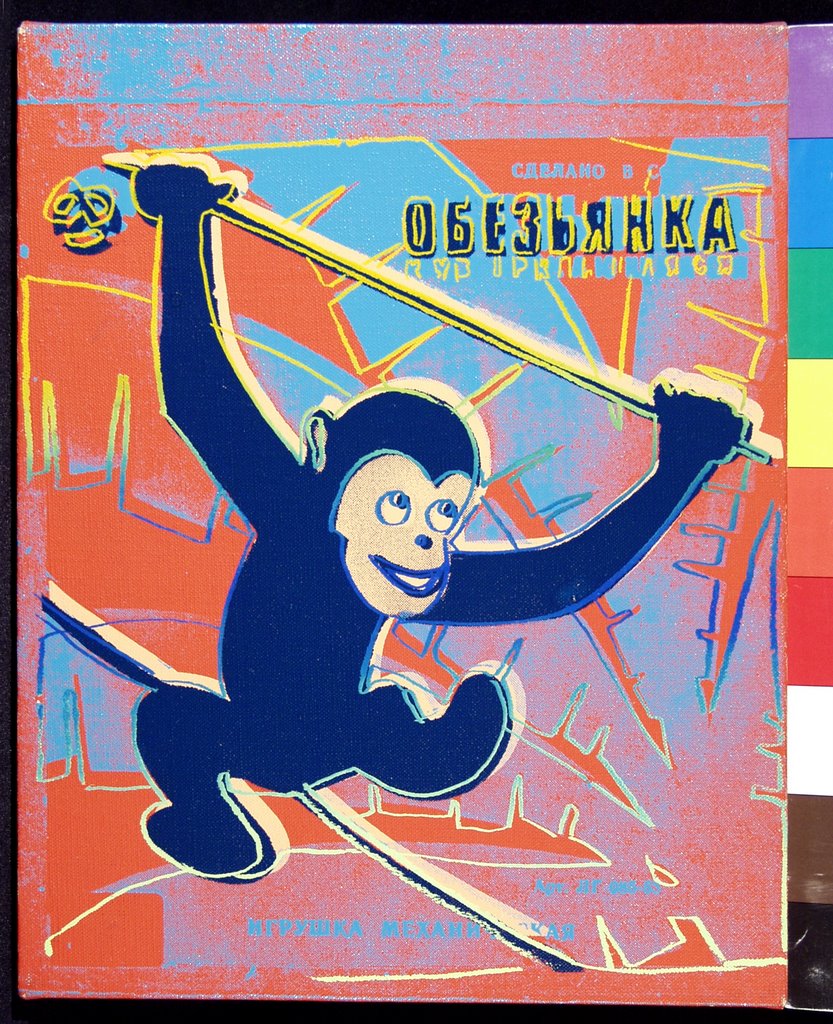
"Myke, you're a Monkey! Don't go bananas — in your former life you were a tiny monkey named Oompa. Here's what we know about you: Adorably sweet demeanor and sharp as a tack, you found success working with a street performer named Juan, who worshipped you and treated you like his own child. He bought you a gold satin jumpsuit with royal blue ruffles, a matching top hat, and a sequined bag for donations. He would play your favorite disco tunes on his accordion, prompting you to dance around and flirt with the crowd while you collected spare change and picked pockets. Everybody loved you. And you loved everybody. You and Juan took your gig around the country and raked in the riches. You were one happy little monkey."

Come to think of it, that's no so awful for someone born under the Year of the Monkey (1968). Could have been bad or worse if I were a rat with delusions of being a bat.

Tuesday, June 13, 2006

Once Upon a Midnight Run

HINDSIGHT has a way of kicking itself smack between the eyes. And I swear it always occur the morning after, while one’s hangover makes a haze of sunrise.

Early last week, I woke up with my legs’ muscles and my soles screaming for a massage. My
buddy Jeremiah and I might as well have rushed headlong to hell, throwing caution to the wind after sousing up at our hangout (our beer bottles sloshing as we whooped up the DVD of a concert in tribute of Burt Bacharach’s music).

Let’s see how far your story holds, or so he challenged me behind his steering wheel en route to where he was supposed to drop me off so I could take the jeepney homeward. That I fancied myself a long-distance runner way back in high school sounded like a tall tale to him, considering my present sedentary demeanor in stark contrast to his manic knack for athletics (particularly basketball).


Outrun each other through the Marcelo Fernan Bridge (spanning the cities of Mandaue and Lapu-Lapu), we agreed. In the middle of the night, for Cerberus' sake!

And so I took off my shoes and my socks so I could dash away like I used to, raring to prove him bluffing isn’t my bottle of beer. He sprinted off ahead of me as soon as he got down the car— and who cared if he was still wearing his office uniform?-- and I followed suit, barefoot and basking in the velocity that could have been the bats’ joy at such ungodly hour. Around us, the darkness was no match to our breathless bravado against the halogen lamps at the bridge ahead of us.

What were we up to, I could only imagine the motorists wondering as they wheeled by. What were we running after? And what if a police patrol or a gang of cutthroats happened to see us?

Though Jeremiah had to concede my lungs can still take an extra mile (and he had to drive me home as a payoff of sorts), he called me the day after and we agreed it was crazy of us to risk cardiac arrest. My wife, of course, was not amused when I told her. Not even if I had to hang my tongue out to the devil by stressing that running was swell. And never mind if I had to swear, with my feet on my mouth and my hand raring to raise another bottle of beer.

Friday, June 09, 2006

If My Life Were A Poem...

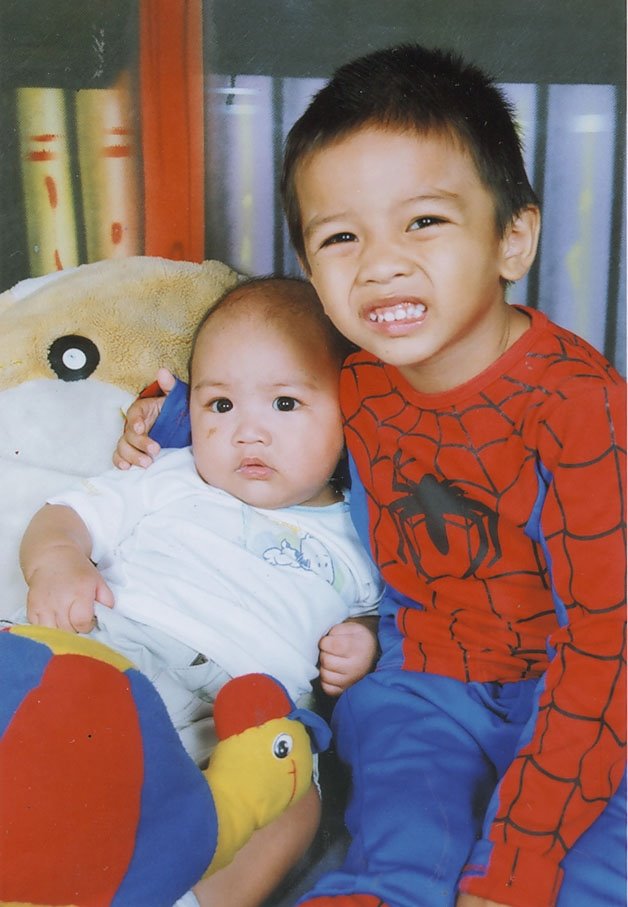
IT'S ALL because of these, out of the grace of Divine Providence, for whom I am home and forever wordless with gratitude and wonder.

Monday, May 22, 2006

Writing In Time Passing

(My keynote lecture at the 13th Iligan National Writers Workshop, 22-25 May 2006)

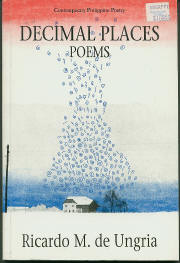
EXACTLY a decade ago, in the morning of the 3rd Iligan National Writers Workshop and Literature Teachers Conference, I sat slack-jawed and starry-eyed while all ears to the keynote lecture of the poet Ricardo de Ungria. It was like listening to a voice from the clouds spelling out the Ten Commandments. You see, when I started to dare find my own spot under the sun of poetry, I was reading—as if it were Holy Scriptures— de Ungria’s collection titled Decimal Places.

I already had the privilege to personally meet and hear de Ungria the summer before that when I got lucky enough to get a fellowship grant to the three-week national workshop in Dumaguete where—like here in Iligan— I did not care so much if my poems were deemed good or bad. What mattered to me then was to get acquainted with my literary “idols” and fellow neophytes primed for a life-long vocation with words. Of course, it didn’t hurt that my greenhorn attempts at poetry also afforded me an opportunity for free travel, meals and lodging.

For a while there, I slurped at de Ungria’s declarations that “the business of making words seems to be a heavenly venture whose pleasures, brief as they are, weigh equal to its burdens.” Now my head still swims with the dazzling torrent of insight about “sense and silence that wait at the end of words… these “pool of sounds deep in the soul that makes silence tolerable and dangerously seductive.”

First Words, that’s the title of de Ungria’s speech. And mine, this morning, are certainly not the last words.

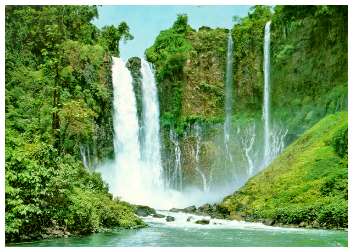
Because, whether I like it or not, what I have to say are merely continuations, a current of ongoing revelations that I’m still wading through, as drenched with wonder as when I stood witness to the flow and plunge of water from the legendary Maria Cristina Falls.

Nothing earth-shaking, my words. I can only swear of feeling what it was like to be struck by a meteor, my knees quaking as they do now, when Madame Christine Godinez-Ortiga asked me to return to this workshop and risk myself being proven undeserving to stand and speak under the long shadow of de Ungria and the succeeding keynote speakers— among them the pillars of Philippine literature who are also this workshop’s panelists.

Immodest not only the honor bestowed upon me by the organizers of this workshop but also my sneaking suspicion that I’m out of place in the company of Christine Godinez-Ortiga, Rosario Cruz-Lucero, Steve Patrick Fernandez, Victor Sugbo, Jaime An Lim, Merlie Alunan (who has spurred me on in my struggle to be unflinching in the demands of the creative life even as she has entrusted and fostered in me the nerve to help in her valiant task in Tacloban to sustain and raise the quality of creative writing in the Visayas--- particularly in the vernacular— through her program called VisWrite) and of course Linda Kintanar-Alburo (who first inspired me to amplify the sound of my mother tongue in Cebuano and to take pride in my promdi identity).

A few years from now, dear writing fellows of the 13th Iligan National Writers Workshop, there will be time to be thankful while reckoning the windfall of grace and meanings out of the mouths of the panelists. There will also be time, plenty of it, to gnash your teeth and bear the burden of choice, either to stop or to go on with the toil, the turmoil, the tightrope thrill inherent in each literary task.

From hereon, the choice is yours whether or not to go the distance and find your own truth as well as your real place under the uncertain weather of the imagination. Yes, while the planet keeps on turning, its tectonic plates continually moving along with the drift of days, the shift of seasons proceeding ever so precariously in borrowed time with the world’s wear and tear.

If you’re lucky enough to survive the greenhouse effect, a nuclear meltdown, a terrorist’s bomb, cancer and cynicism in the next ten years, one of you will come back here in Iligan to be the next keynote speaker and attempt to make a ripple deep in the heart of a new set of writing fellows.

The world will always welcome writers— even if unloved and despite the odds-- as time goes by. In fact, there’s a multitude out there, who seems scared of not making their mark, who fiddle with words to make their presences felt even if their only chance to get published is in their Internet blogs. (According to Technorati, a website tracking the so-called blogosphere, at least 750,000 new bloggers are born everyday to pour out their heart and gall, waxing literary, in cyberspace.) Even if books would be passé and there would be no more trees left for making paper, many will still find and seek warmth in writing, at least, online.

Short of making fire by striking stone upon your hard-headedness, a few of you here might even be inflamed enough to carry the torch of creative writing in the country. Dreaming on to discover new literary talents, you might be awakened rudely how’s it’s like to tilt at windmills, to wear your ulcer on your sleeve and swallow your pride with your spit while you look for pockets of support to tide over your workshops in the long haul.

One of you here would probably achieve a level of success or a certain degree of notoriety, if not temerity, that could serve you well when you’re in the mood for cannibalism over the bone of contention for the next National Artist for Literature whose aesthetics or politics may not be to your taste.

This I know in my writing life so far— etiquette and the ethic for serenity in the face of strife is hardly the birthright of the tribe of writers who can be just as ruthless, not only with their creative cravings but also with their bloody appetite for one-upmanship. Squinting for enlightenment may crack the writers’ eyeglasses, but the green-eyed monster of envy and intrigue may also leave him or her with hair on the tongue for anybody preening with a Palanca or National Book Awards medal. I also know that playing politics and power-tripping are also in the bag of some writers’ tricks, and sometimes they’d even fancy flicking off and out of existence in a puff of smoke other writers—especially those who raise their stakes in national literature by believing the only way “to go global is to go local,” and who get frowned upon for being far from the madding literary crowd in Manila.

It’s a jungle out there, dear fellows, and whatever blood you may spill in this workshop might as well beef you up into licking your wounds and weaning yourself out of the milky-white notion that writing is all about sweetness and light and only for the tender or for the tame of spirit.

As always there’s no stopping the conspiracy against the compulsion for creative writing.

If you have embers in your liver enough to endure self-immolation in the altar of literature, defined by Anthony Burgess as an “aesthetic exploration of the world,” then you’ve got what it takes to withstand the coldness of condescension, intolerance, indifference. To persist in spite of alienation and displacement—this has been the defining characteristic of the creative artist true to his or her calling through the ages.

Never mind the Inquisition. Forget the exhortation of Plato prohibiting the creative writer— the poet, particularly— out of his ideal Republic, consigning to the cave those burning with creative conviction.

Never mind if your exertion in exposing authentic experience and revealing meaning—or how to make its presence felt on and off the page--- often gets whittled down to the wreckage of a deconstruction. “There’s no presence, there’s only representation,” argues the critic Geoffrey Hartman, who seems to have concurred with the philosophy of Jacques Derrida who maintained that “language is inevitably ambiguous” because, well, “There’s nothing outside the text.”

Forget the fatwa on Salman Rushdie and other fatal forms of suppression to which every writer is ever so vulnerable like, for instance, the slovenly economics of publication and the paucity of readership.

Creative writing, as far as some people are concerned, is no less futile as whistling at the deaf or winking at the blind. It makes nothing happen, so goes a poet’s lament. Truth be told, those with Promethean madness of impulse to give light to the so-called human condition have invariably run the risk of invisibility even as they strive for “visible truth” which, according to Herman Melville in a letter to Nathaniel Hawthorne, “is the apprehension of the absolute condition of present things.”

Of the way things are, the creative artist’s version of their presences seems no more substantial than smoke or mist against the public preference for representations of reality as portrayed in the tabloids and television. “Human kind cannot bear very much reality,” wrote T.S. Eliot who certainly could see “the hollow men” out of poets and story-tellers becoming a “paralyzed force, gesture without motion” in the face of public mania for escapism in a time when television and its inventions have mostly become inversions, if not misrepresentation of the real world.

True, the world wants to be entertained even as it needs to be enlightened. And that’s something the bankable Nerissa Cabral can prove now that her komiks novels, like “Bituing Walang Ningning,” have been adapted into box-office blockbusters by Viva Films and, recently, into a telenovela by ABS-CBN where a Saturday night show titled “Komiks” is now getting its fair share of the ratings with its revivals of such classic komiks serials like “Kamay ni Hilda,”Inday Bote,” “Blusang Itim,” “Agua Bendita” and “Bunsong Kerubin.” Eat your heart out, Neil Gaiman.

Unlike many of our creative writers in ivory towers, Nerissa Cabral could see how real it was, in another time and place, for the readers of Charles Dickens novels to wait for its serial form, in installments, to come out at the street corner. A time when Leo Tolstoy’s Anna Karenina was a serialized novel, and Balzac, an indefatigable provider of mass-produced serializations—“gave the still unanimous writer lessons in the technique of suspense, of building to a climax.”

To get public affirmation, would the writer in this unfriendly time for reading be better off with a byline over a glaringly photographed story about rape and murder and mayhem in politics? Or, perhaps, would he rather get his dues as one of the hacks for the primetime potboilers smack in the heat of the network wars? Or how about wishing for and waiting to audition for Pinoy Big Brother: Writer Edition even if Wislawa Zysmborska has maintained that a writer’s job is hardly telegenic and hopelessly unphotogenic?

In the convenient kingdom of the sensational and the one-dimensional— in this golden age of telenovela, fantaserye and reality TV when the prosaic rules fantastic and puts under its spell both the educated and the illiterate— the easiest way to be in a time warp is to talk of the reign of reading wherein the literary artist can find his own “clean, well-lighted place” and drink to Octavio Paz’s declaration: “Poetry is the present.”

But, yes, the poet Charles Simic does affirm Paz’s inebriated effusion when he wrote: “The present is the only place where we experience the eternal. The eternal shrinks to the size of the present because only the present can be humanly grasped.”

For a sobering reality check—in the face of public fascination with fantasy and half-baked revelations of truth— Simic’s words are quite handy: “We can reach the real only by overcoming the seduction of images.”

In the future, God forbid one of you here to look back and recall with a sigh all the shoptalk about craft and admit with a sinking feeling that you have merely skimmed the surface, ultimately drowning in the guilt and regret of someone “who used to write.” Piece of cake, indeed, to eat humble pie and admit nothing’s harder than holding one’s creative grounding when the rigors of raising a family and making a living suck you into a quicksand of quotas, deadlines, bills to pay.

Then again—against your better judgment that creative writing does not pay beyond peanuts— you’d be gasping for breath in utter unbelief because the papers tell you that a witchery with words has in fact caused a wildly imaginative J.K. Rowling into becoming the richest woman in England, beating even Queen Elizabeth. And then, perhaps, you might be struck with a thunderbolt of inspiration and, taking your cue from Dan Brown’s flair for raising eyebrows, write and let yourself levitate with a controversial conjecture: That who keep on wanting to become poets or fictionist or those who keep on running writing workshops may have the bloodline of Jesus and Mary Magdalene, among other Biblical characters?

For isn’t the passion endured by some creative writers— where repression and apathy are facts of life— also a variation on a theme of crucifixion? Isn’t Veronica’s white hanky etched with the injured face of Christ an apt metaphor for the writer’s blood and snot streaked all over the whiteness of a page?

Ten years from now and beyond, way back since the dark threatened to shadow the light of faith over the Biblical declaration that in the beginning was the word, the writers will still be playing devil’s advocate against their own demise— despite the forces that propel them toward wordlessness.

Displacement may be a commonplace for literary workers in the past, present and future. But Literature has endured, along with those who prevailed by taking heed of the creative call. There’s reason and rhyme, indeed, for Gunter Grass’s proclamation: “A writer is someone who writes against the current of time.”

Wednesday, May 10, 2006

Blogosphere Blues

WHEN BLOGS RULE, we'll all talk like... Thus Daniel Henninger, deputy editor of Wall Street Journal, waxes elliptical in his article titled, "Disinhibition Nation." Here's more than meets your rolling eyeballs:

Kevin Ray Underwood, the repressed Oklahoma cannibal, kept an Internet "blog" of his compulsions for years before kidnapping and killing a 10-year-old neighbor last week. On his blog, Kevin wrote a lot about Kevin: "The reason for my lackluster social life is a severe case of social anxiety and depression. I'm on medication now, which helps a lot. Well, in ways."

I don't think the blogosphere is breeding cannibals. But it looks to me as if the world of blogs may be filling up with people who for the previous 200 millennia of human existence kept their weird thoughts more or less to themselves. Now, they don't have to. They've got the Web. Now they can share.

Technorati, a site that keeps numbers on the blogosphere, reports that as of this month the number of Web logs the site tracks is 35.3 million, and doubling every six months. Technorati claims each day brings 75,000 new blogs. We know something's happening here but I'm not sure we know what it is.

Typically, a blogger creates a Web site and then, in the pale glow of a PC screen, types onto a keyboard what's on his or her mind. A blog nearly always invites readers to share their "comments," which they do, and which the blogger posts seriatim. People in my business tend to think blogging is mostly about politics on sites such as Wonkette, the Huffington Post or the Daily Kos. There are highly intellectual blogs, such as the Becker-Posner Blog, run by Nobel economics laureate Gary Becker and federal judge Richard Posner. Their April 16 post is titled "Tax Complexity and the Cost of Compliance," with comments.

But in a "Blogs Trend Survey" released last September, America Online reported that only 8% blog to "expose political information." Instead, 50% of bloggers consider what they are doing to be therapy. Some might argue that using the Internet to self-medicate includes many nominally political blogs, but more on that shortly.

Not surprisingly, a new vocabulary has emerged from clinical psychology to describe generalized patterns of behavior on the virtual continent. As described by psychologist John Suler, there's dissociative anonymity (You don't know me); solipsistic introjection (It's all in my head); and dissociative imagination (It's just a game). This is all known as digital identity, and it sounds perfectly plausible to me.


A libertarian would say, quite correctly, that most of this is their problem, so who cares? But there is one more personality trait common to the blogosphere that, like crabgrass, may be spreading to touch and cover everything. It's called disinhibition. Briefly, disinhibition is what the world would look like if everyone behaved like Jerry Lewis or Paris Hilton or we all lived in South Park.


Example: The Web site currently famous for enabling and aggregating millions of personal blogs is called MySpace.com. If you opened its "blogs" page this week, the first thing you saw was a blogger's video of a guy swilling beer and sticking his middle finger through a car window. Right below that were two blogs by women in their underwear.

In our time, it has generally been thought bad and unhealthy to "repress" inhibitions. Spend a few days inside the new world of personal blogs, however, and one might want to revisit the repression issue.

The human species has spent several hundred thousand years sorting through which emotions and marginal neuroses to keep under control and which to release. Now, with a keyboard, people overnight are "free" to unburden and unhinge themselves continuously and exponentially. One researcher quotes the entry-page of a teenage girl's blog: "You are now entering my world. My pain. My mind. My thoughts. My emotions. Enter with caution and an open mind."

The power of the Web is obvious and undeniable. We diminish it at our peril. But what if the most potent social effect to spread outward from the Internet turns out to be disinhibition, the breaking down of personal restraints and the endless elevation of oneself? It may be already.

Disinhibited vocabulary is now the normal way people talk on cable TV, such as on "The Sopranos" or in stand-up comedy. On the Web and on the street, more people than not talk like this now. What once was isolated is covering everything. No wonder the major non-cable networks are suing to overturn the FCC's decency rulings; they, too, want the full benefits of normalized disinhibition. Hip-hop, currently our most popular music form, is a well-defined world of disinhibition.

Then there's politics. On the Huffington Post yesterday, there were more than 600 "comments" on Karl Rove and the White House staff shake-up. "Demoted my --- the snake is still in the grass." "He should be demoted to Leavenworth." "Rove is Bush's Brain, and without him, our Decider-in-Chief wouldn't know how to wipe his own ----."

From a primary post on the same subject on the Daily Kos, widely regarded as one of the most influential blogging sites in Democratic politics now: "I don't give a ----. Karl Rove belongs in shackles." "A group of village whores have taken a day off to do laundry."

Intense language like this used to be confined to construction sites and corner bars. Now it is normal discourse on Web sites, the most popular forums for political discussion. Much of this is new. Politics is a social endeavor. The Web is nothing if not "social." But the blogosphere is also the product not of people meeting, but venting alone at a keyboard with all the uninhibited, bat-out-of-hell hyperbole of thinking, suggestion and expression that this new technology seems to release.

At the risk of enabling, does the Internet mean that all the rest of us are being made unwitting participants in the personal and political life of, um, crazy people? As populist psychiatry, maybe this is a good thing; the Web allows large numbers of people to contribute to others' therapy. It takes a village.


But researchers note that the isolation of Web life results in many missed social cues. It is similar to the experience of riding an indoor roller coaster, what is known in that industry as a "dark ride." This dark ride could be a very long one.