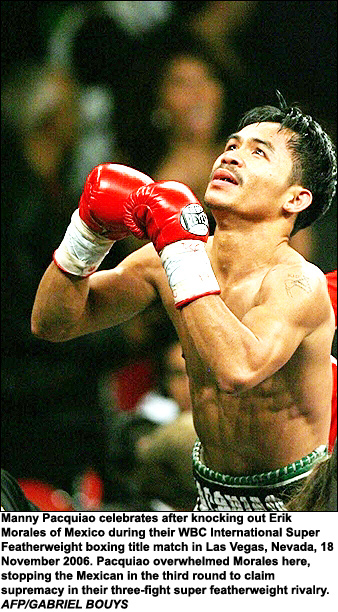
 HEAVENLY, this pose after packing a knockout punch: an oblation of hands inverting the "V" of victory, of eyes rapt with gratitude. Such gesture, such grace of humility before a higher power, would have been out of sorts for one who rules in a sport steeped in machismo and vainglory. But there he is, showing us the stuff true champs are made of. Alleluiah, indeed!
Showing posts with label Celebrity. Show all posts
Showing posts with label Celebrity. Show all posts
Monday, November 20, 2006
His Highness
HEAVENLY, this pose after packing a knockout punch: an oblation of hands inverting the "V" of victory, of eyes rapt with gratitude. Such gesture, such grace of humility before a higher power, would have been out of sorts for one who rules in a sport steeped in machismo and vainglory. But there he is, showing us the stuff true champs are made of. Alleluiah, indeed!

Sunday, November 19, 2006
Dossier For The Dopey
SOME blogger got me tagged for a ride en route to that netherworld of self-indulgence. So, take it or leave it, here goes the buzz from my upfront dialogue with the rear-view mirror:
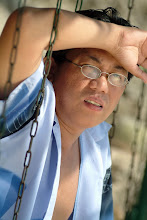
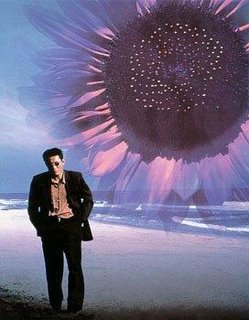 Which actor would best play you in the film of your life? Takeshi Kitano.
What would the title of your autobiography be? Still Grinning and Scratching My Head After All These Years
If you were a country, which one would you be? Italy by day, Japan by night
If your philosophy in life could be summarized on a car sticker, what would it say? Walking is better, but having a chaffeur is best.
If you could choose your own nickname, what would it be? Geez, this question’s Einstenian enough to rumple the remains of my hair!
If people used your name as a verb, what would it be for? For telling everyone not to take themselves too seriously
 If you had your 15 minutes of fame, what would it be for? For Scarlett Johannson to tell the paparazzi that it was me who devirginized her through mental telepathy
If you could be a fictional character, who would you be? Peter Pan. Or if I’d grow up, Zorba the Greek and Odysseus.
What three qualities in a woman would be essential for her to qualify as the love of your life? Hey, wanna meet my wife?
Which TV character do you most identify with? The voice-over in the commercials
How would you describe yourself in a lonely hearts ad? Thrives well in solitude. Envious of lighthouse keepers, librarians, carpenters, chefs, gardeners and landscape artists, and directors of blue movies. Addicted to beer. A frustrated guitarist and symphony conductor. Lured but scared of the sea. And, yes, I have a lifelong crush on Nora Aunor.
 If you could be an animal, what creature would you be? Pegasus
In what era do you belong? Way back where the air of innocence was struck with the soundtrack of such televised fares as Hawaii Five-O, Six-Million-Dollar Man and Superstar.
When someone asks you, What do you do? What would you like to be able to say? I aspire to be St. Augustine, thank you!
Which fashion designer epitomizes your sense of style? Would you haul me off to the nearest nudist colony, instead, please?
What car would you be? I’d rather be a tartanilla hauled by Pegasus.
What season is most like you? Rainy, the sort that drives me and my kids outside in the downpour while my wife prepares arroz caldo or pancakes and hot chocolate in the kictchen.
Where are you in life’s swimming pool? In the deep or shallow end, floating, sinking, on the diving board or in the changing room? Swimming pool? Get real, life is either an ocean or a sewer.
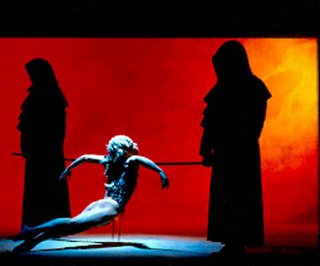 What song sums you up best? Carl Orff’s Carmina Burana because it sounds barbaric and heavenly at the same time
What flower would you be? Dama de noche, if not a nocturnal sunflower
What are your three best qualities? I remember. I celebrate. I believe. (Otherwise, I’d be damned!)
What three words would your detractors use about you? What three words would your friends use about you? Who do you agree with? Guess what? Reading the minds of my friends and foes alike is too presumptuous for my own comfort.
Which of the seven deadly sins are you most likely to commit? Lust and pride. (If not, I would be a saint.)
What famous person, past or present, would most enjoy your company? Bert “Tawa” Marcelo, because he laughed a lot whether he meant it or not. Plus the cool fact that he used to be an endorser of San Miguel beer. Swell!
 Which actor would best play you in the film of your life? Takeshi Kitano.
What would the title of your autobiography be? Still Grinning and Scratching My Head After All These Years
If you were a country, which one would you be? Italy by day, Japan by night
If your philosophy in life could be summarized on a car sticker, what would it say? Walking is better, but having a chaffeur is best.
If you could choose your own nickname, what would it be? Geez, this question’s Einstenian enough to rumple the remains of my hair!
If people used your name as a verb, what would it be for? For telling everyone not to take themselves too seriously
 If you had your 15 minutes of fame, what would it be for? For Scarlett Johannson to tell the paparazzi that it was me who devirginized her through mental telepathy
If you could be a fictional character, who would you be? Peter Pan. Or if I’d grow up, Zorba the Greek and Odysseus.
What three qualities in a woman would be essential for her to qualify as the love of your life? Hey, wanna meet my wife?
Which TV character do you most identify with? The voice-over in the commercials
How would you describe yourself in a lonely hearts ad? Thrives well in solitude. Envious of lighthouse keepers, librarians, carpenters, chefs, gardeners and landscape artists, and directors of blue movies. Addicted to beer. A frustrated guitarist and symphony conductor. Lured but scared of the sea. And, yes, I have a lifelong crush on Nora Aunor.
 If you could be an animal, what creature would you be? Pegasus
In what era do you belong? Way back where the air of innocence was struck with the soundtrack of such televised fares as Hawaii Five-O, Six-Million-Dollar Man and Superstar.
When someone asks you, What do you do? What would you like to be able to say? I aspire to be St. Augustine, thank you!
Which fashion designer epitomizes your sense of style? Would you haul me off to the nearest nudist colony, instead, please?
What car would you be? I’d rather be a tartanilla hauled by Pegasus.
What season is most like you? Rainy, the sort that drives me and my kids outside in the downpour while my wife prepares arroz caldo or pancakes and hot chocolate in the kictchen.
Where are you in life’s swimming pool? In the deep or shallow end, floating, sinking, on the diving board or in the changing room? Swimming pool? Get real, life is either an ocean or a sewer.
 What song sums you up best? Carl Orff’s Carmina Burana because it sounds barbaric and heavenly at the same time
What flower would you be? Dama de noche, if not a nocturnal sunflower
What are your three best qualities? I remember. I celebrate. I believe. (Otherwise, I’d be damned!)
What three words would your detractors use about you? What three words would your friends use about you? Who do you agree with? Guess what? Reading the minds of my friends and foes alike is too presumptuous for my own comfort.
Which of the seven deadly sins are you most likely to commit? Lust and pride. (If not, I would be a saint.)
What famous person, past or present, would most enjoy your company? Bert “Tawa” Marcelo, because he laughed a lot whether he meant it or not. Plus the cool fact that he used to be an endorser of San Miguel beer. Swell!
Friday, August 04, 2006
Bona Comes Back
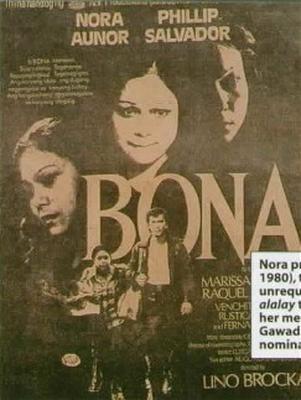
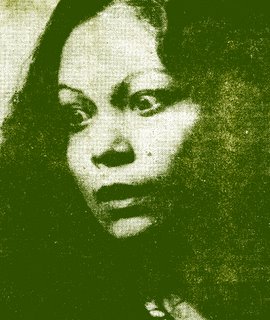 C ited as one of the "Best 100 Films in the World" by the Museum of Tolerance (Los Angeles, USA) , Lino Brocka's Bona highlights the hapless plight of film archiving in the Philippines. Sadly, the country holds no copy of this gem of a film which has been acclaimed in various international film festivals like Cannes and Torino. There's hope, however, that the present generation would still have the chance to see it.
From a recent private screening of Bona, Ateneo professor and anthropologist Tito Valiente takes a second look at one of the most celebrated Filipino films (shown in 1980) in his recent column in Business Mirror (3 August 2006). Here goes the reprint:
Native Returns
At the lobby of Studio 1 of ABS-CBN, a table draped in a wide swath of cloth cradled flowers. Around it were posters of a film copied from old newspapers. A man in business clothes was standing still beside one of the photos. That was the closest they could get near the horizon of a person called Nora Aunor. That night, a copy of Bona, the movie produced by Aunor and directed by Lino Brocka was going to be screened, the copy provided by Cinematheque Française, a film institution in France that archives excellent cinema. (Bona will have its cable television premiere in the Sunday Cine Premiere block of Cinema One on August 20 at 8 pm.)
 As with the other guests filing in, people were there with similar purposes. There were the young cineastes who may have read the reviews of Bona in various film journals and web sites and blogs, for Bona is one of the most dissected Filipino films. These people may have cited the film as one of their favorite works even if they had not seen it previous to this evening. The sheer presence of the film in the minds and essays of writers and critics was enough to convince them that they were dealing with a work that was benchmarked and graded according to accepted international aesthetics. But there were also middle-aged men moving as one, looking like pilgrims about to approach the inner sanctum of the shrine. They were so quiet that you could feel through their movements the grace of many a Nora Aunor cinematic outings. These are people who could utter word for word, grand inflection for grand inflection, the dialogues that their idol—in the sense of worship and reverence—gave voice to on the silver screen.
It was not merely a voice coming from a body. Nora’s voice in many films, including those that were sinfully trivial and fun, slithered and sauntered out of the screen and into the domain of the popular, the populist, the political. The lines, as well as the characters, from which those meanings sprung transcended the instrument of cinema and became part of the collective yearnings of a mass audience who saw in Aunor not just an actor but someone equipped with a divining rod that could trace the fault lines of a group of people even as it would direct them to the wellspring of their neurosis and salvation. Aunor’s much-documented celebrity was going to go through a reassessment that night, to check if the books—and essays and poetry—written about her icon were really truthful valuation of her person and her genius and not simply the ranting of academics trying out new theories about popular culture.
Seated as I was at the orchestra, surrounded by fans, I could sense the undertow of nervousness in those faces upturned to the screen; there was also sadness and longing. Most of the people there, I believe, were perched at the edge of their seats, the gurgling in their hearts pushing them almost to the edge of a sweetly welcomed nervous breakdown. Again that night, some simply ceased to be film viewers and moved on to be witnesses of an apparition.
A history of tastes
 The metaphor of the sacred, the discourse of power, and the narrative of dispossession apply to the audiences of Bona as well as to the film.
The film opens with the male-dominated procession of the Black Nazarene of Quiapo. Men are throwing their shirts and towels onto the carriage of the Christ icon, to be wiped against the body of the icon. Then the face of Aunor, as Bona, is shown, lost in the crowd, but not lost in the ritual. The next scenes bring us to what preoccupies Bona (other than a religion in display). She is seduced by another faith, as she displays to us an almost reverential and awe-stricken admiration for a bit-player, Gardo. Critics use the word “obsession” to process the relationship that brings Bona to Gardo. But viewing the film again gives us other words. Like irrationality. Like lust and love.
You know, of course, the story. How, one night, Gardo comes home and tells Bona that he is leaving for abroad, and she should just go home. Then how Bona looks at the boiling pot of water. And the rest is cinematic history. Part of this history is that Bona the film and Aunor as Bona have become guideposts for the evolution of film-viewing and re-viewing in the Philippines. Go and run to the nearest library and catch the writeups of that period, when Bona was first screened commercially, and you will see how so much of the appreciation of the film went beyond and behind the cinema.
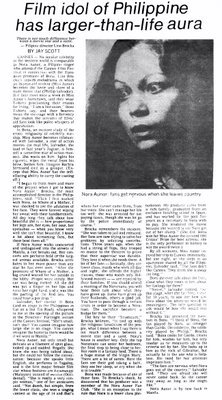 Reporters then wrote how Aunor had to produce the film to convince people that she could act. And yet, Bona was produced in 1980, a full three years after Aunor thundered through the screen in Tatlong Taong Walang Diyos, and went on to win the Urian for Best Actress that year.
The screening answers many questions but also opens up many more. Given how the screenplay displays an almost reckless disregard for coherence, one could ask now if Brocka really enjoyed Aunor in the film. The film looks like it is meant to showcase another talent, that of Phillip Salvador, thus bringing some critics to describe the film as his film. One could even wonder why Brocka and the writer chose a bit player as the object of Bona’s adoration. This preoccupation with Salvador, however, becomes the bane of the movie.
At the end, Bona is indeed Nora Aunor’s work. Bona is Aunor looking, with a bit of melodrama and masochism, how she, an unknown, has become the object of many people’s adoration, the actor becoming the icon.
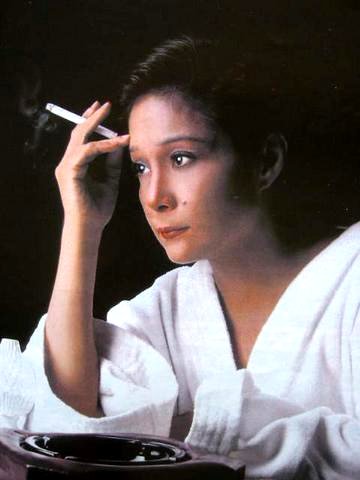 The power of the tragedienne/icon in Aunor is that she is able to weave a character into a full functioning tapestry of nerves and magic. Even then, you cannot blame those who genuflect before her when they cite the many gems in Bona. There is Aunor running away from her father, the speed of her escape as frantic and funny as it was demented. Aunor looking from the fence into her home where the wake for her father is taking place, fear and love and anxiety etched in a shot that merely shows one half of her face. Aunor peeking from the kitchen, tension personified, the rigid figure melting into the loneliest of embraces with her mother, played with brittle tenderness by Rustica Carpio. Then, there is that scene—when she throws the boiling caldron of water onto Gardo’s body, the wretchedness on her face a troubling chemistry of dementia and despair, and a rage that seems to travel from her scarred soul, in a nuanced form that only Aunor could summon.
You can look for more, but at the end, there is one lesson: Nora Aunor is second to none and no one follows after her. Not yet, anyway. I knew this when I stepped out of the Studio One into the lobby once more. The table that held the flowers was shrouded in black, more like in mourning for the passing of good films that we used to make, and for an actor like Aunor, whose genius might as well be dead in our dreary landscape of commercialism and bad taste.
*** Photos culled from the blogs of Willi Pascual and Jojo de Vera as well as the archive of the International Circle of Online Noranians (ICON) e-group.
Friday, March 10, 2006
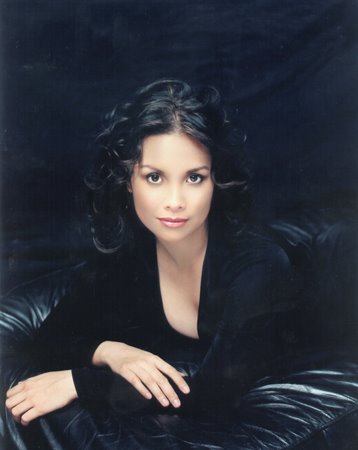
La Aunor, In the Eyes of Lea Salonga
From the posting of Ron Maceda, a Noranian, in an e-group composed of the Superstar's fans:
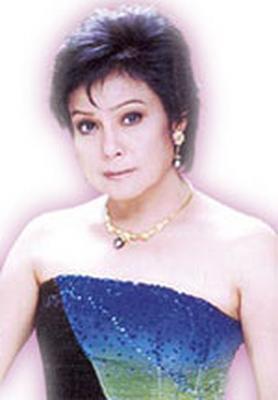 Last night, the international star proclaimed on national TV that Nora Aunor is a genius actress and a
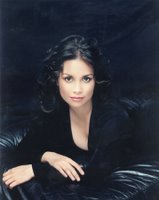 great singer. Lea guested on Loren Legarda's Real Stories aired every Friday on Channel 5.
Asked if any local star gets her starstruck, Lea candidly answered: "Nora Aunor."
The Tony awardee admitted to having watched some of the Superstar's films on TV and professed her admiration for her acting style. "There's this one movie scene where Nora's face seemed blank. And only her eyes were acting," she said. "I was impressed. I remember saying to myself: that woman is a genius!... And she's a great singer, too."
 Last night, the international star proclaimed on national TV that Nora Aunor is a genius actress and a
 great singer. Lea guested on Loren Legarda's Real Stories aired every Friday on Channel 5.
Asked if any local star gets her starstruck, Lea candidly answered: "Nora Aunor."
The Tony awardee admitted to having watched some of the Superstar's films on TV and professed her admiration for her acting style. "There's this one movie scene where Nora's face seemed blank. And only her eyes were acting," she said. "I was impressed. I remember saying to myself: that woman is a genius!... And she's a great singer, too."
Subscribe to:
Posts (Atom)